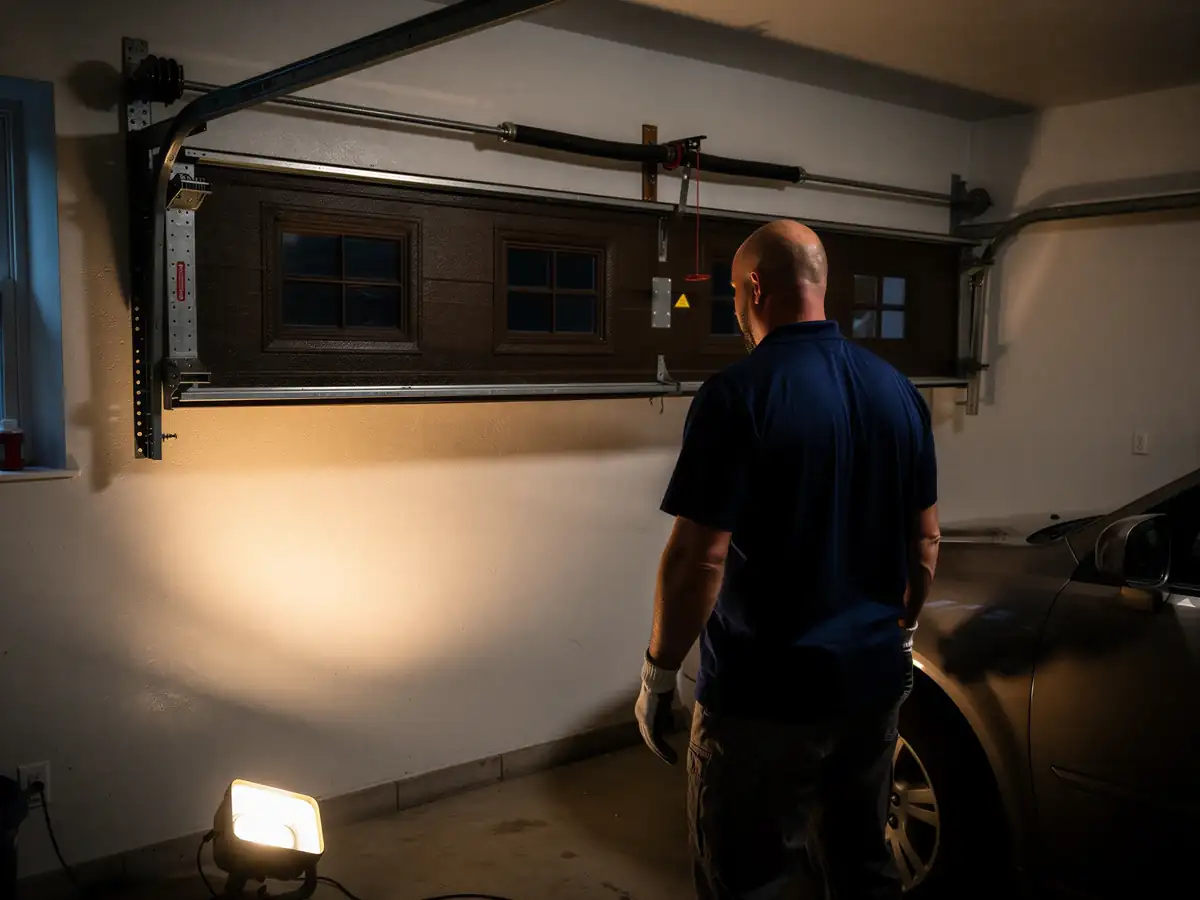
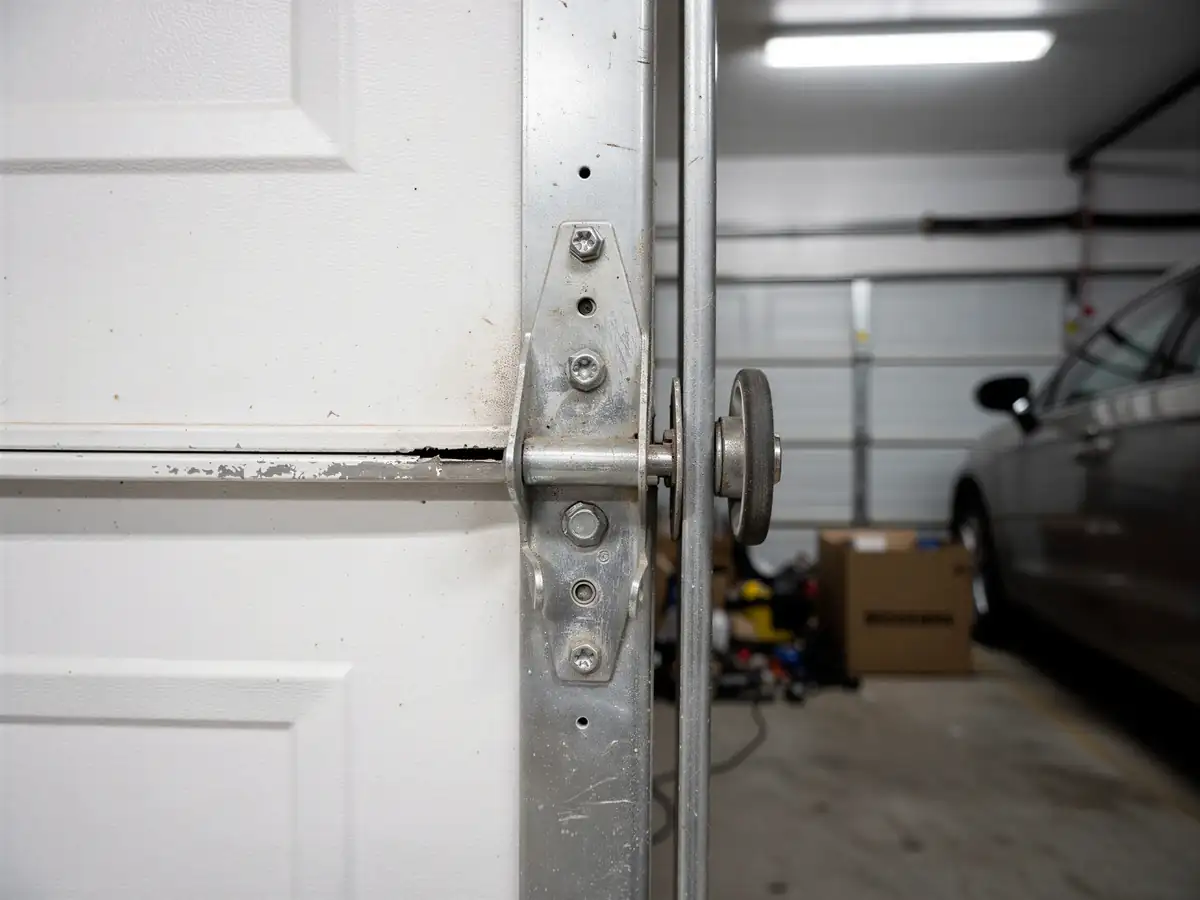
Why This Fails Locally
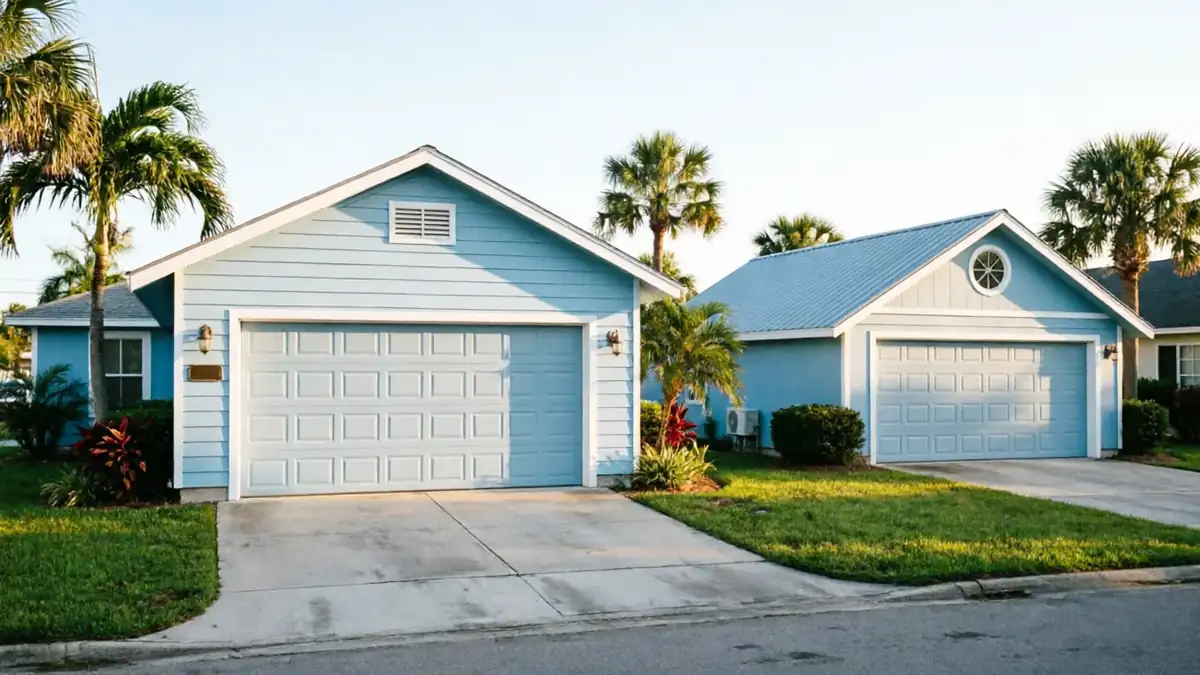
A door comes off its track for a handful of reasons, and in this service area the same two or three show up over and over. Most of the housing stock here went up between 1972 and 1993, with a median build year around 1986 - that's true across the twelve areas we cover, not just one neighborhood. That means a lot of garages still running the original steel track brackets, the kind fastened with lag screws into jambs that have had thirty-plus years to shift and loosen.
The climate band here is mild temperate - we don't get freeze-thaw cycles that crack concrete and tilt slabs the way colder regions do. But mild doesn't mean kind to hardware. Humidity and salt-laden air corrode roller bearings and track bolts quietly, over years, until a roller finally seizes or a bracket lets go under normal spring tension. The door doesn't fall off the track from one dramatic event most of the time. It walks off, a little more each month, until one day it jumps the rail entirely.
We also see cars clip the bottom panel in narrower, older driveways designed for smaller vehicles than what people drive now. That knocks a bottom roller clean out of the track, and the door binds or tilts the next time someone tries to run it.
None of this is a mystery once you've seen it on enough doors from the same era. It's predictable, which is the point.
Booking a Visit
We cover the Daytona Beach service area, which runs from Holly Hill about 5 miles out to Flagler Beach at 20 miles, and includes South Daytona, Daytona Beach Shores, Samsula-Spruce Creek, Ormond-by-the-Sea, Ponce Inlet, New Smyrna Beach, Glencoe, De Leon Springs, Lake Helen, and Edgewater. That's roughly 54,644 households across the area, with about 32,499 of them in owner-occupied houses - the kind of housing stock where an off-track door is a common call, not a rare one.
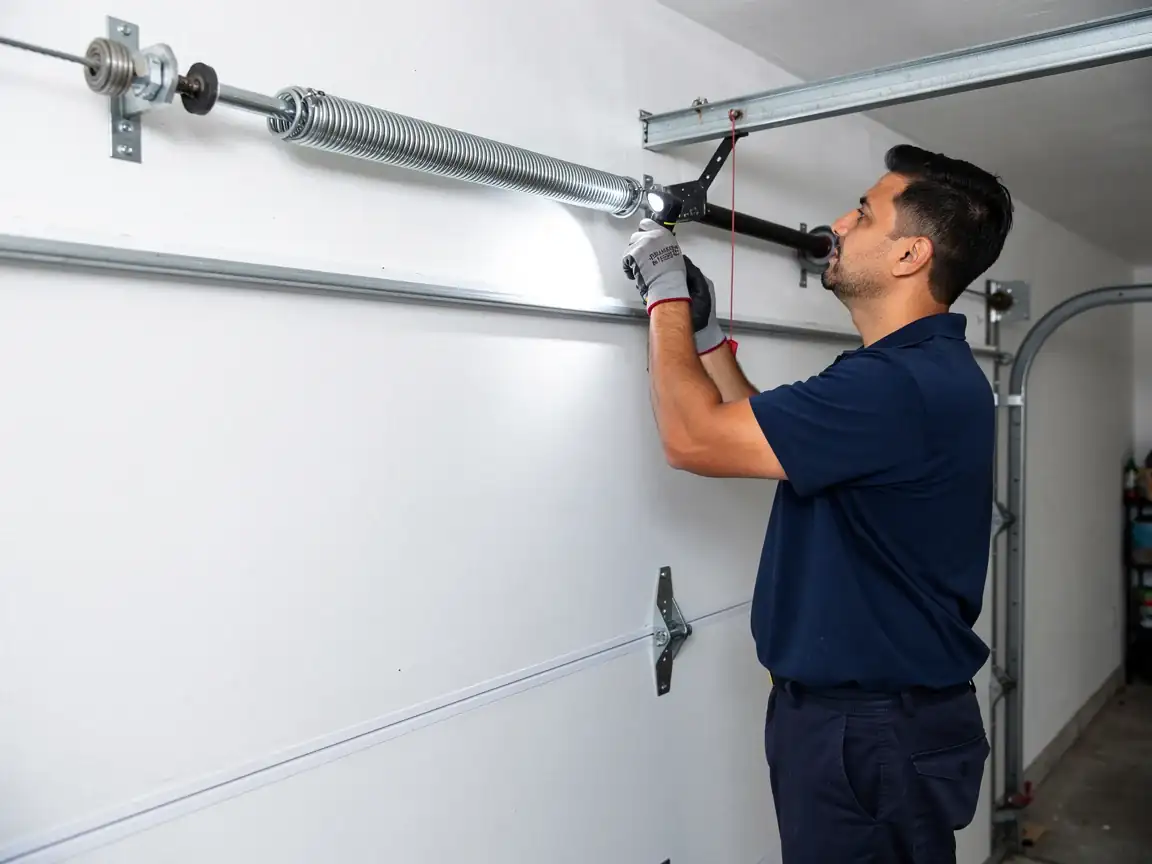
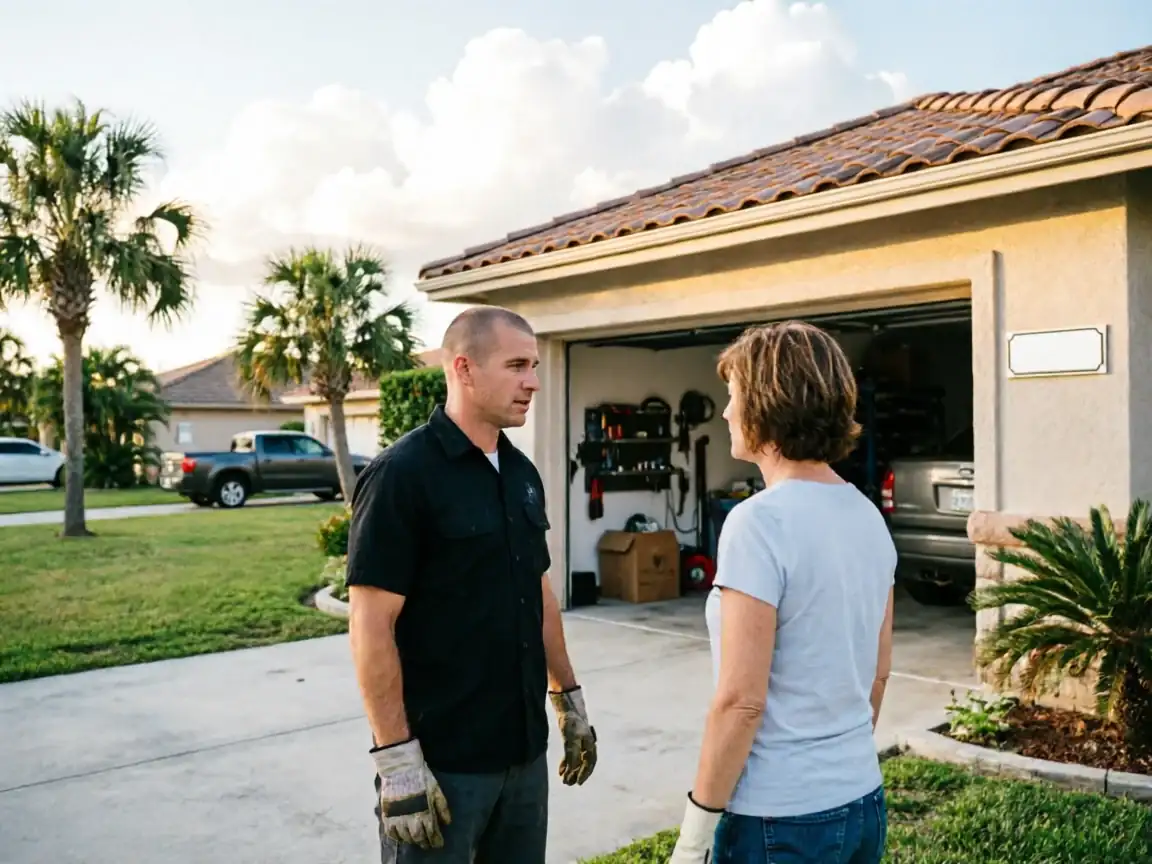
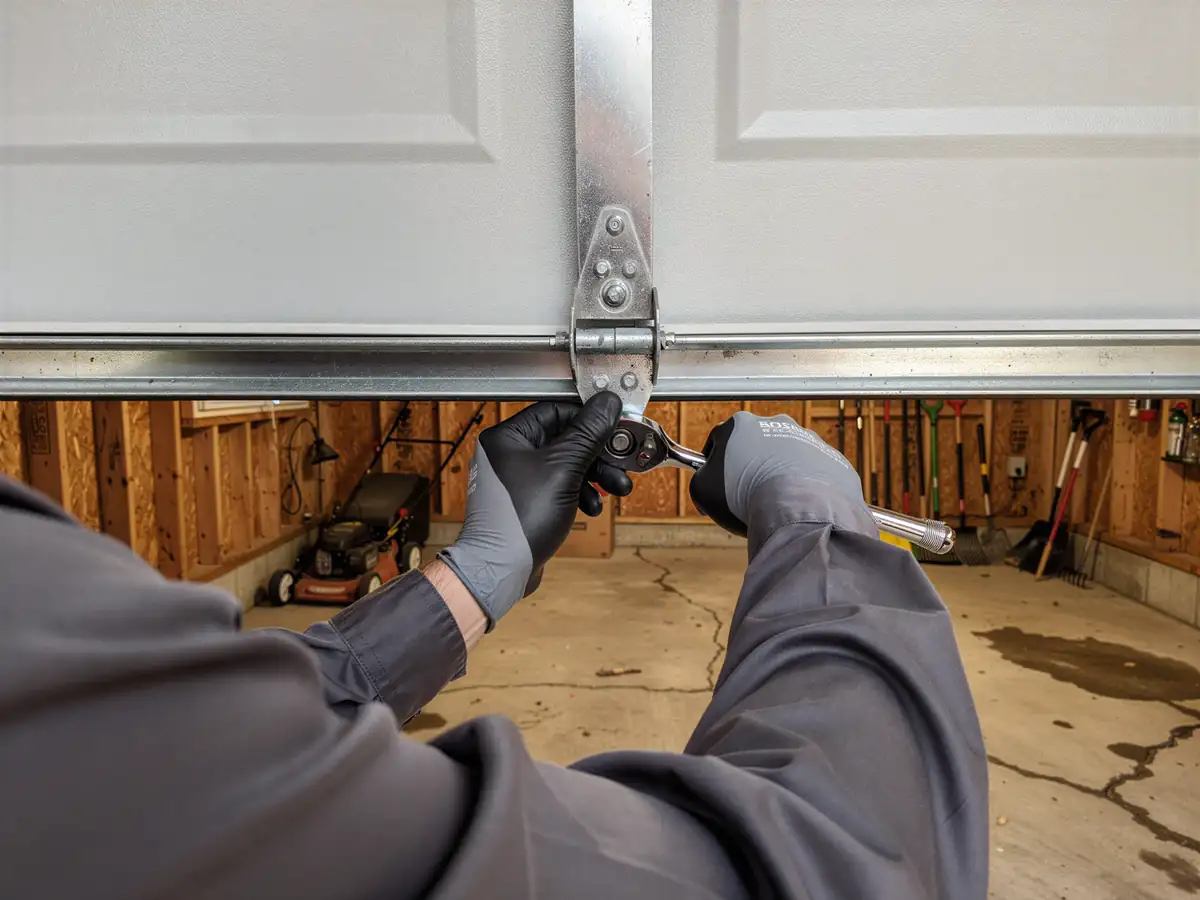
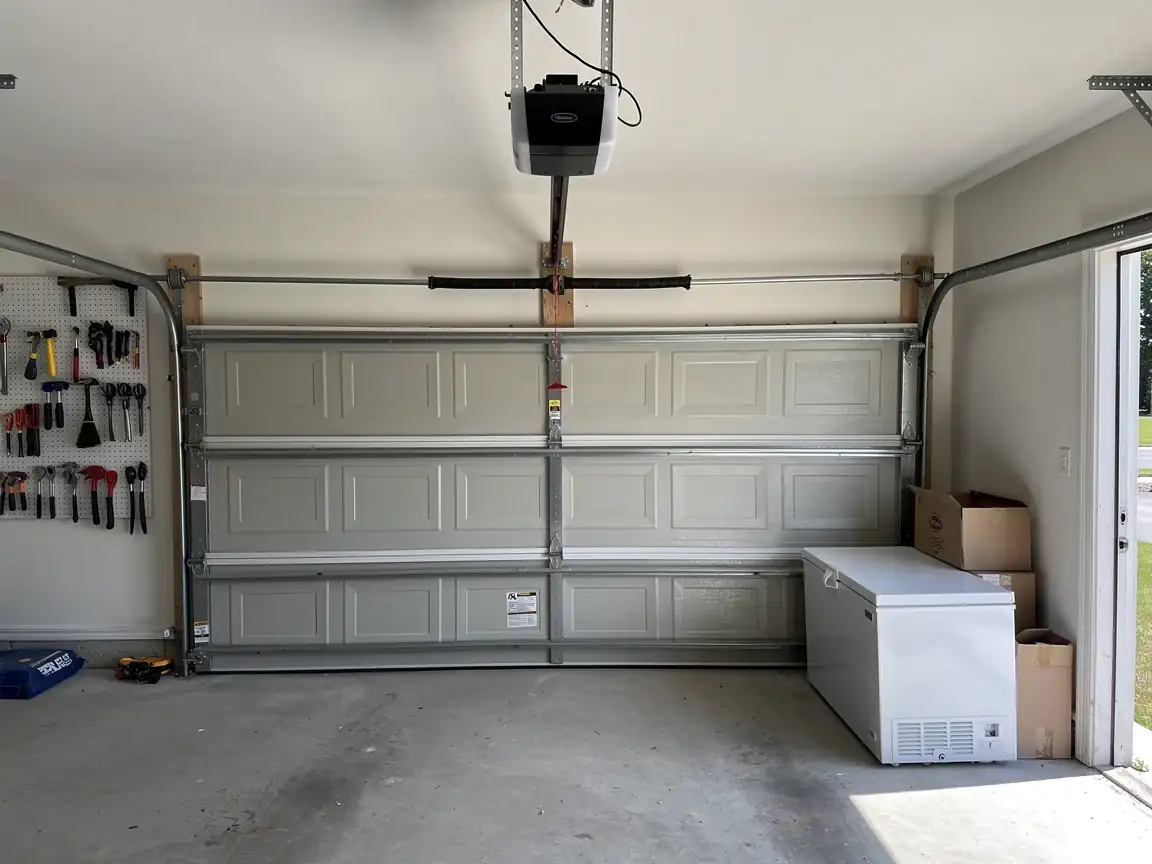
When you call, tell us what the door is doing: did it come off on one side or both, is it stuck half open, can you see a bent roller or a bracket hanging loose. That tells us what to bring. A single roller off the track on one panel is a different job than a door that's racked sideways and jammed in the opening - the second one usually means we're also checking the cables and the spring before we touch the track.
Don't try to force the door closed or open once it's off track. That's the fastest way to turn a one-hour fix into a bent track, a cracked panel, or a spring that lets go while someone's hands are on the door. Leave it where it is and call.
The Cost of This Job
We don't have a flat number to put here
Because the cost of an off-track repair depends entirely on what's actually wrong once we open the panel up. A single bent roller and a loose bracket is a short job. A door that's racked, with a cable off the drum or a track bent along its length, takes longer and may need a track section replaced rather than straightened - straightening a track that's bent more than a little almost never holds.
What we can tell you honestly
If the track is only cosmetically dented, we'll straighten it rather than sell you a new one. If it's bent enough that the door won't ride true after straightening, replacing that section is the right call even though it costs more up front, because a door that keeps jumping the rail is a door that eventually drops a spring or a panel on someone.
The one thing we won't do is quote a price over the phone for an off-track door without seeing it
Too many homes in this area have older track and bracket setups where what looks like a simple roller problem turns out to be a worn bearing or a bent rail hiding behind it. We'd rather give you an accurate number standing in your garage than a guess that changes once we're there.
The Symptom
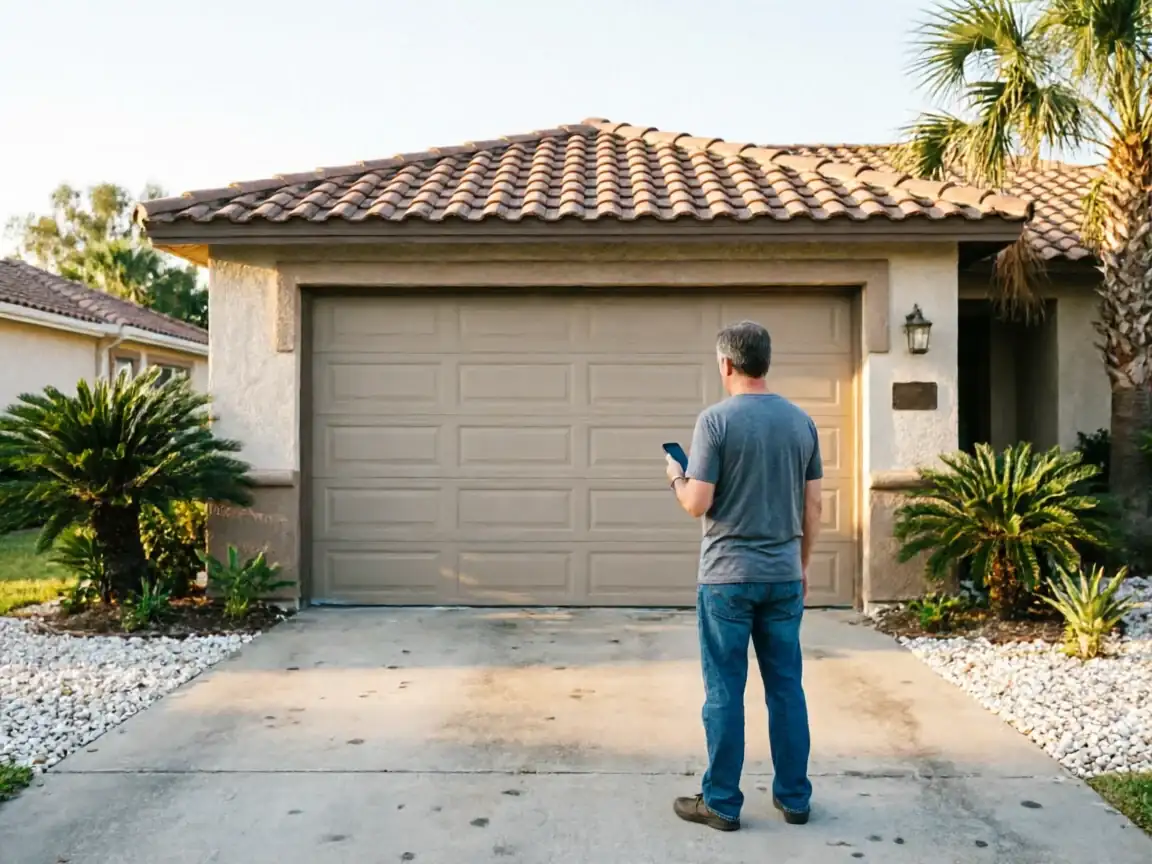
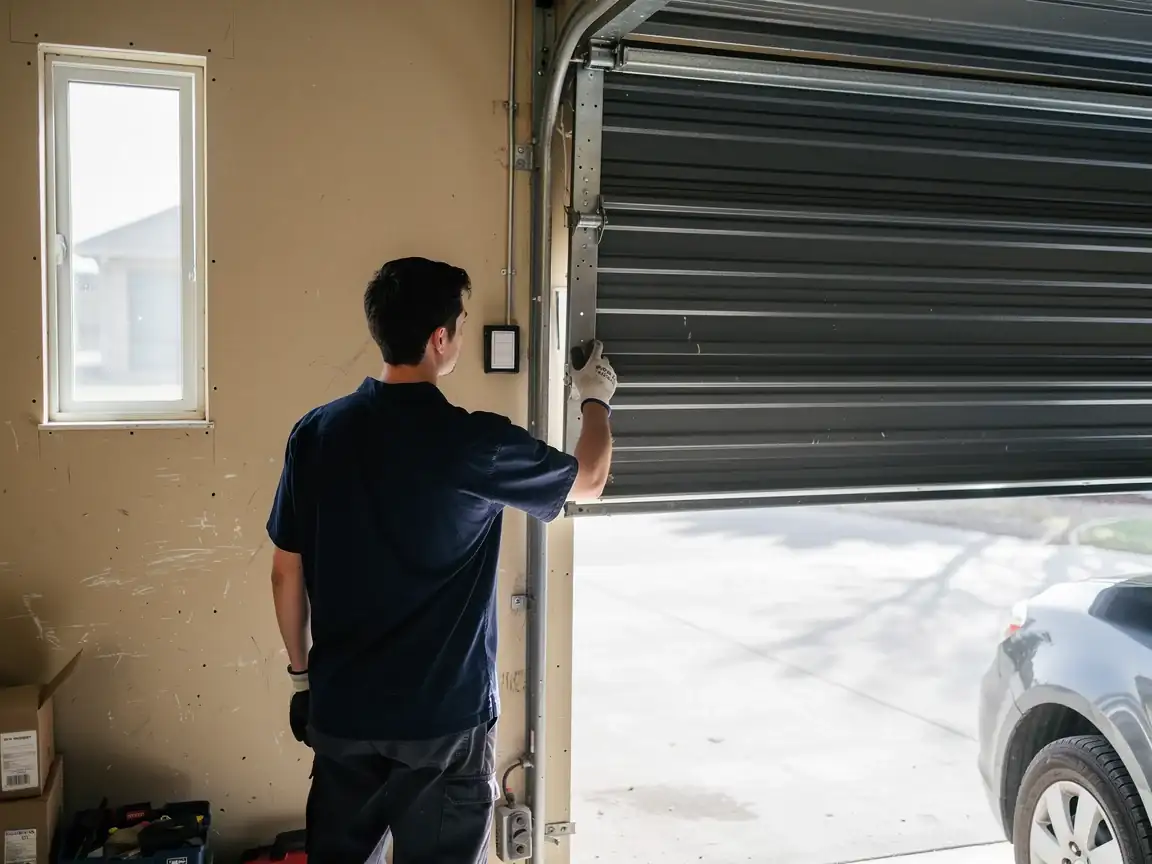
Here's what it usually looks like: the door is open or half open and won't move, or it moves and grinds against something that sounds like metal on metal. Sometimes one side of the door hangs lower than the other, visibly crooked in the opening. Sometimes a roller is sitting loose on the garage floor or dangling from its bracket.
If the door came off while it was closing, it may be sitting cocked in the frame with daylight showing at one corner - that's the panel binding against the track on one side while the other side still has a roller seated. If it happened while opening, you'll often find the door stopped partway up, refusing to go further because a roller has popped out of the channel and is catching on the bracket edge.
A door that's merely noisy - squeaking or grinding but still tracking straight and opening fully - isn't off track yet, it's heading there. Worn rollers and loosening brackets give warning for weeks before they actually let go. If your door's gotten louder over the last month or started hesitating at one spot on the track, that's the same mechanism starting to fail, just earlier in the process.