The Complications
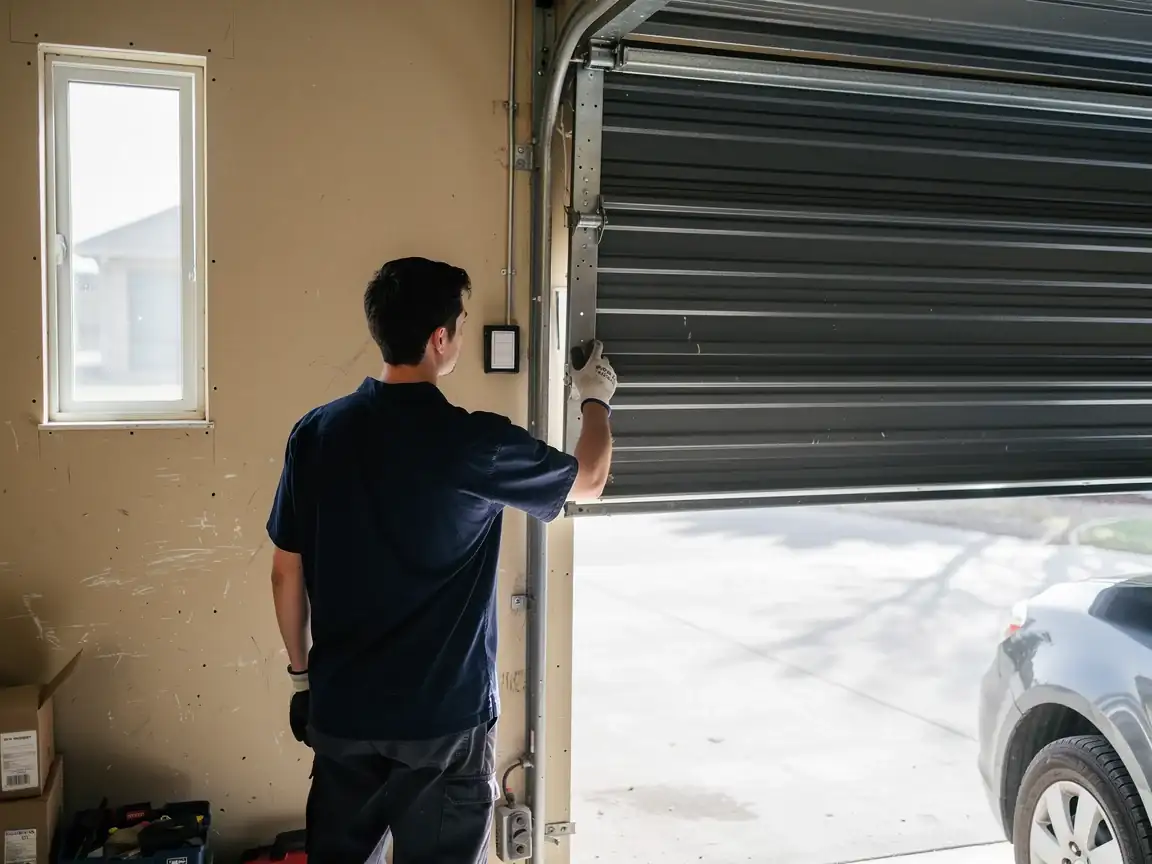
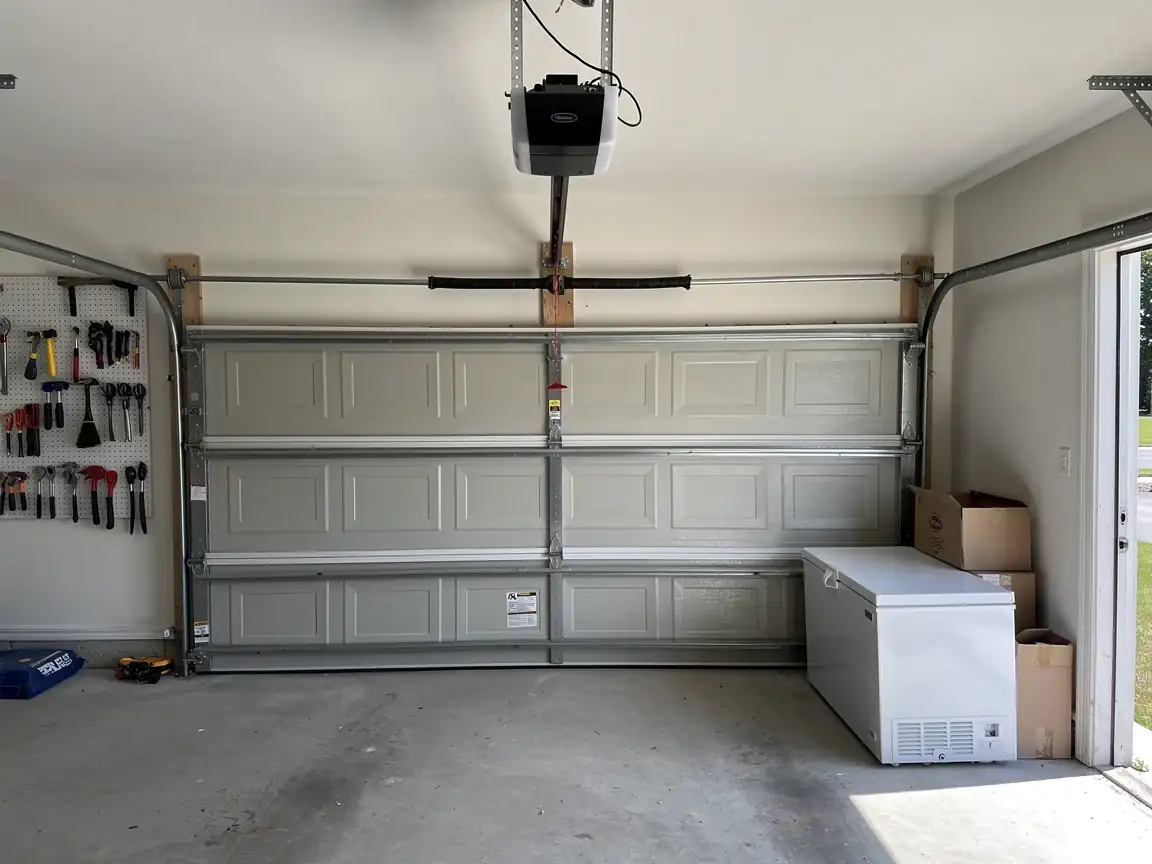
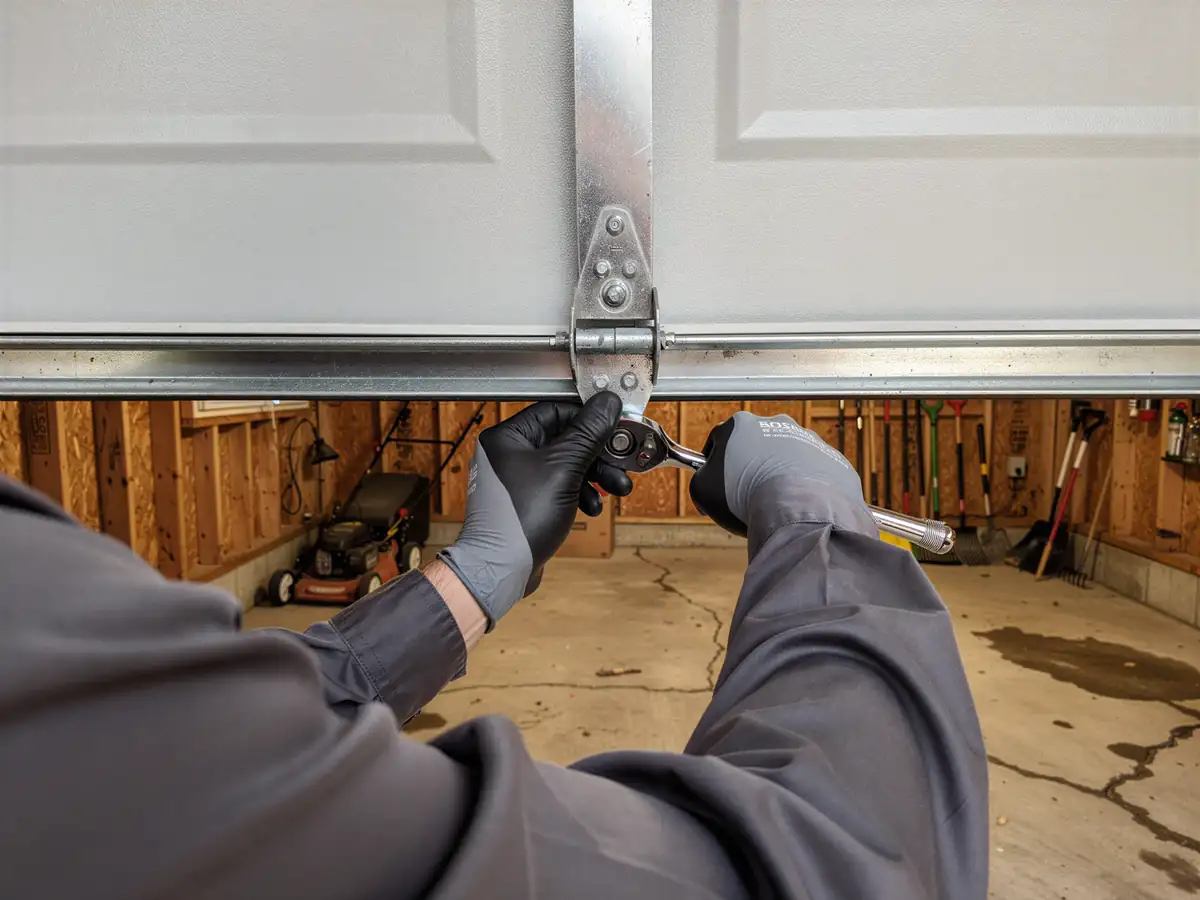
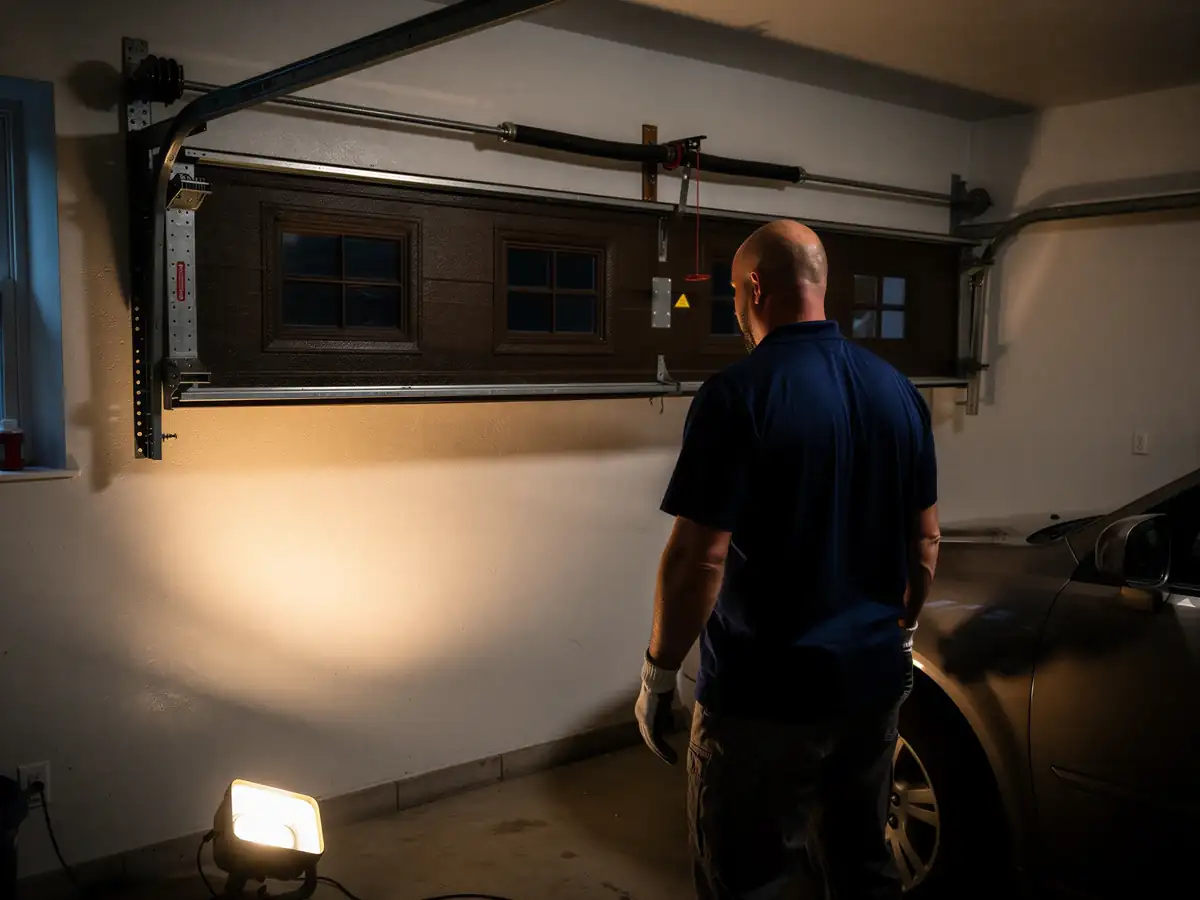
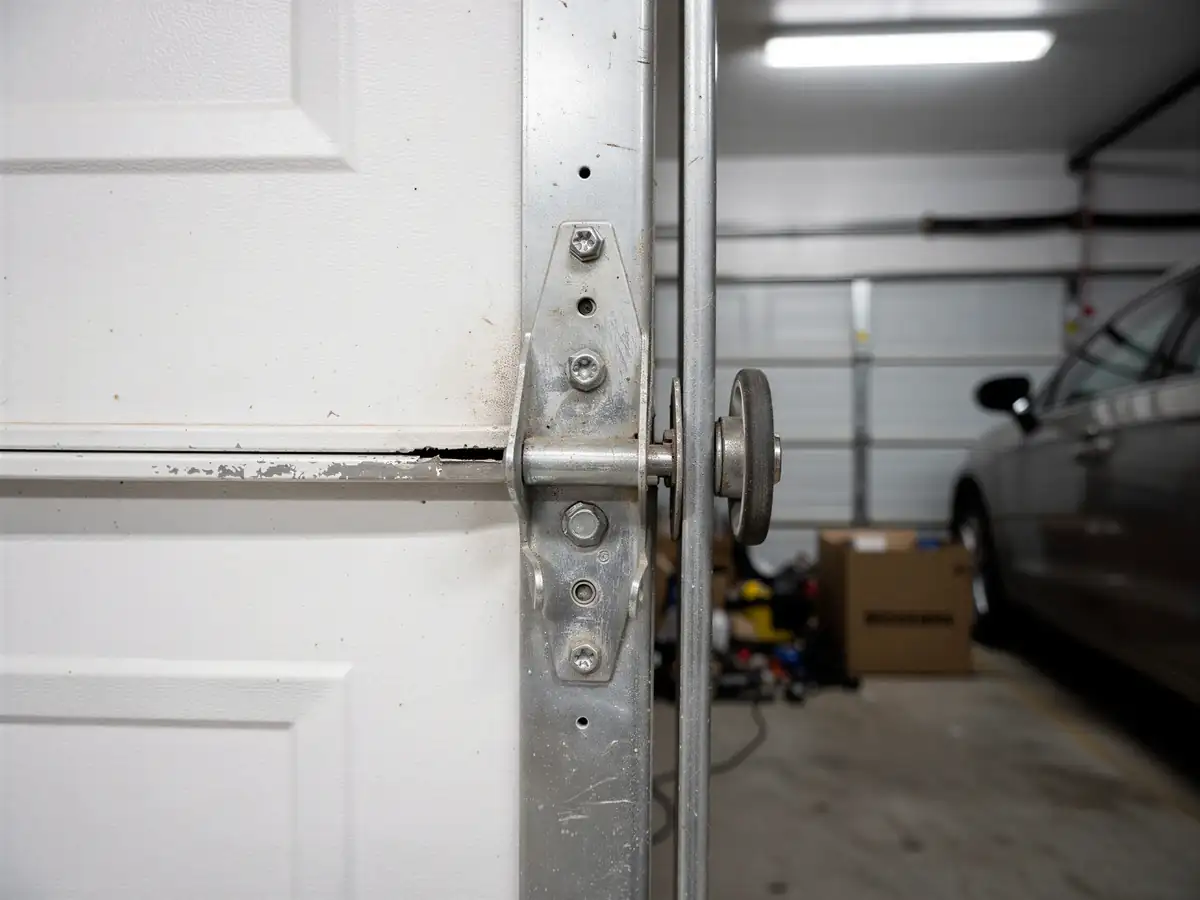
When a door jumps track here, it's almost never a one-step fix. The door looks stuck halfway, cocked at an angle, or hanging loose on one side while the other side still rides the rail. People call it "off track" like it's one problem, but there are usually two or three things wrong at once: a bent track section, a roller that's worn down to the stub, and a cable that's slipped off its drum because the door dropped unevenly.
Most of the houses out this way went up between 1972 and 1993, with the middle of that range landing around 1986 and this stretch running close to 1988. That matters because doors installed in that window came on steel tracks hung with lighter brackets than what gets used today, and the rollers were often plain steel or early-generation nylon, not the sealed ball-bearing kind. Thirty-plus years of opening and closing wears those parts down slowly, and the track brackets loosen in the framing over time. By the time a door jumps the rail, the hardware holding it up has usually been failing for a while, not just that day.
Why This Fails Locally
Samsula-Spruce Creek sits in a mild temperate band, so you're not dealing with the freeze-thaw cracking that breaks track brackets in colder climates. What you get instead is steady humidity working on steel track and hardware year after year - not dramatic, but constant. Tracks that were never sealed or repainted after installation develop surface rust at the bolt holes, and that's exactly where the bracket meets the framing. A rusted bolt hole doesn't hold torque the way a clean one does, so the track shifts a few degrees out of plumb. One hard open, one rushed close, and the roller rides off the edge of the rail instead of staying inside it.
This area has roughly 2,128 households, smaller and noticeably higher-income than the wider service area's average, where the median household sits near $69,150 against about $90,575 out here. That tends to mean homeowners who bought additional insurance and backup systems for the house but didn't necessarily think about garage door track hardware until it failed - it's not a part anyone budgets to replace proactively.
The Cost of This Job
A straightforward off-track call
Door's jumped the rail but the track itself isn't bent and the rollers are salvageable - is a shorter visit: realign the track, reset the door on the rail, check the cable drums. That's the cheap end of this job.
The cost climbs when the track is actually bent
Which happens more often on these older installs because the steel gauge used in the 1980s and early '90s flexes more than what's standard now. A bent track section usually means replacing that section rather than trying to hammer it straight - straightening it back into true alignment rarely holds for long, and a track that looks fixed but isn't is worse than one that's obviously broken. If the rollers are original steel and worn thin, those get swapped too, since putting a realigned door back on worn-out rollers just sets up the same failure again in a few months.
We don't have a flat number to quote here without seeing the door
Because the spread between a quick realignment and a track-and-roller replacement is wide. What we can tell you up front: if your door is original to a house built in the late 1980s, budget toward the higher end of that range, not the lower.
Booking a Visit
We run out of Daytona Beach, about 10 miles from Samsula-Spruce Creek, so when you call we're scheduling a drive out, not a walk from around the corner. That's worth knowing because it means we ask a few questions up front - is the door stuck open, stuck closed, or hanging at an angle - so the truck that shows up has the right track stock and rollers on it instead of guessing.
If the door is in a position where it could drop further or come off the rail entirely, don't force the opener and don't try to walk it back into place by hand. Prop it if you can do so safely from the side, away from the track, and give us a call.
Can You Do This Yourself
If the door has only partially jumped the track and you can see the roller sitting just outside the rail, some homeowners manage to walk it back in by hand with the door disconnected from the opener. That's about the limit of what's safe to do solo. Anything past that - a bent track, a roller that's shattered or seized, a cable that's come off the drum - needs leverage and tools most people don't keep in the garage, and the door is under enough spring tension that forcing it the wrong way can snap something back at you.
We'll say plainly: if your track is original to a house built in the late 1980s and it's bent, don't try to straighten it yourself. The steel at that age is more brittle than it looks, and a track that cracks mid-repair is a bigger job than the one you started with.