Why This Fails Locally
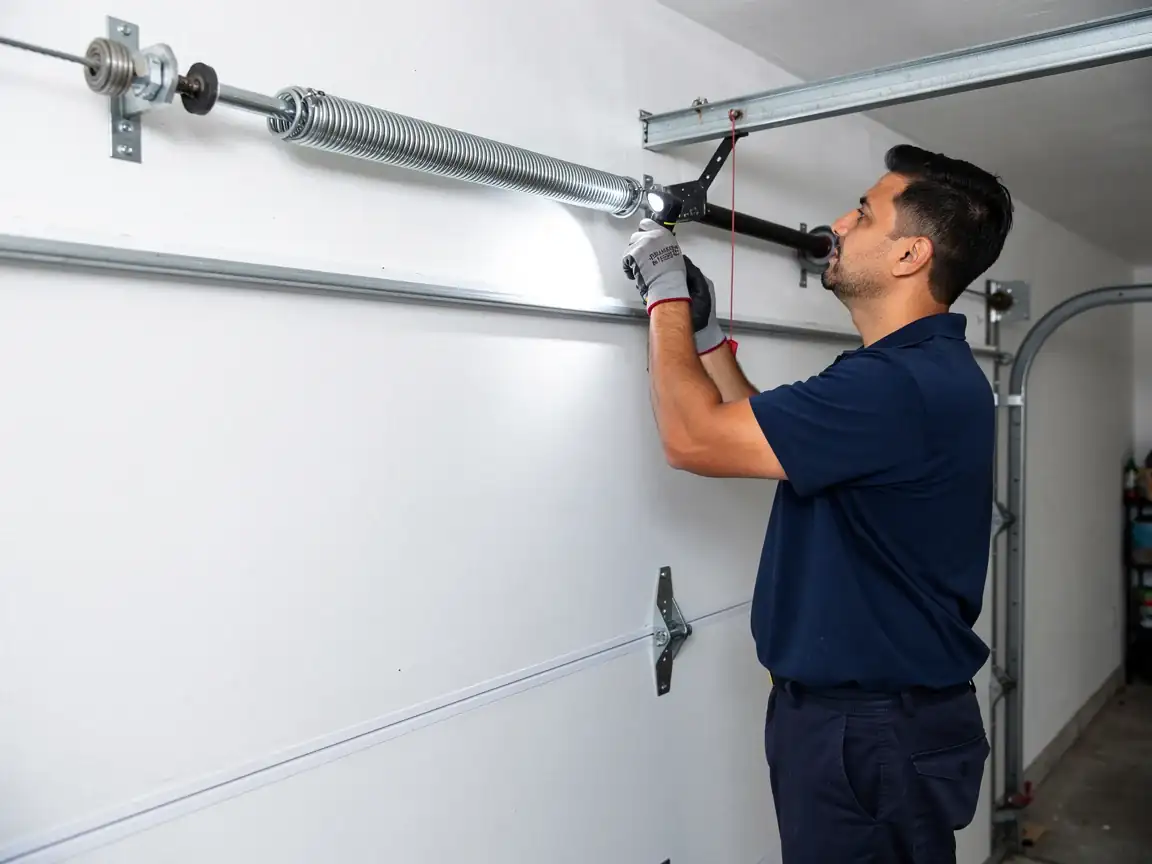
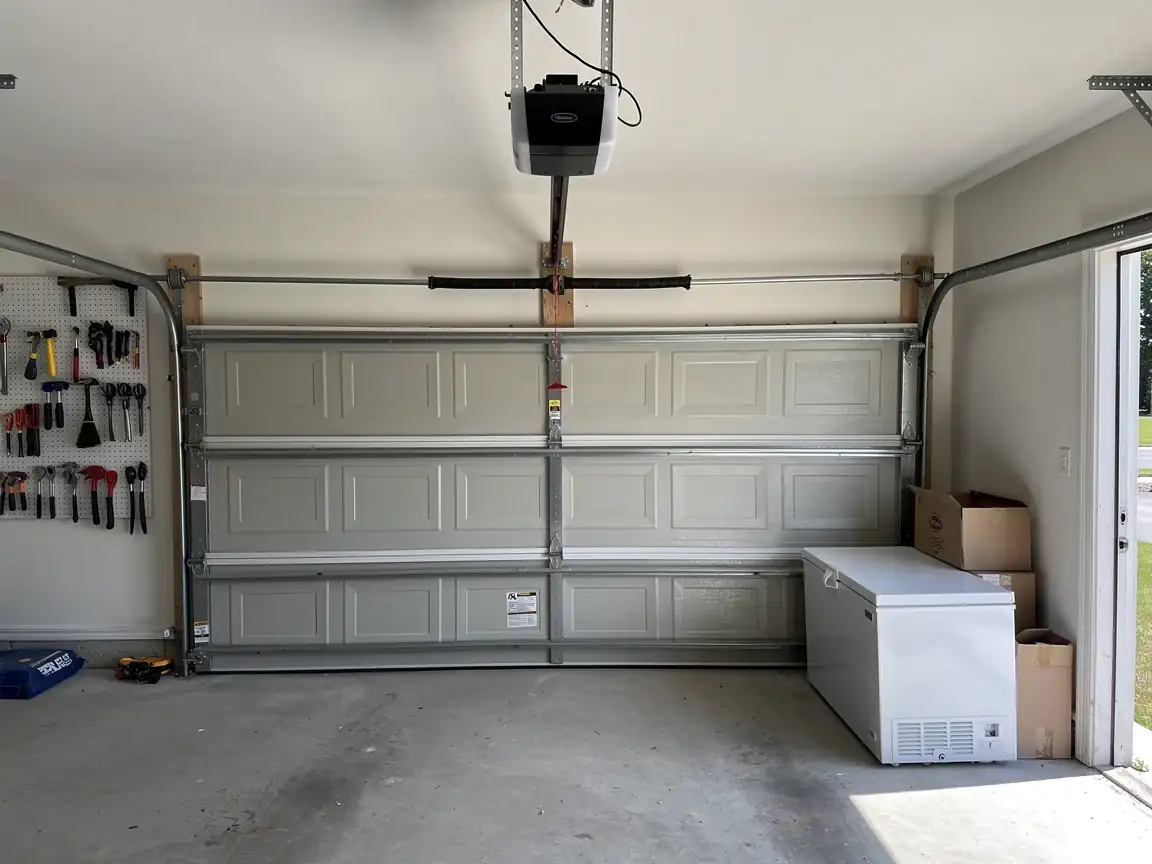
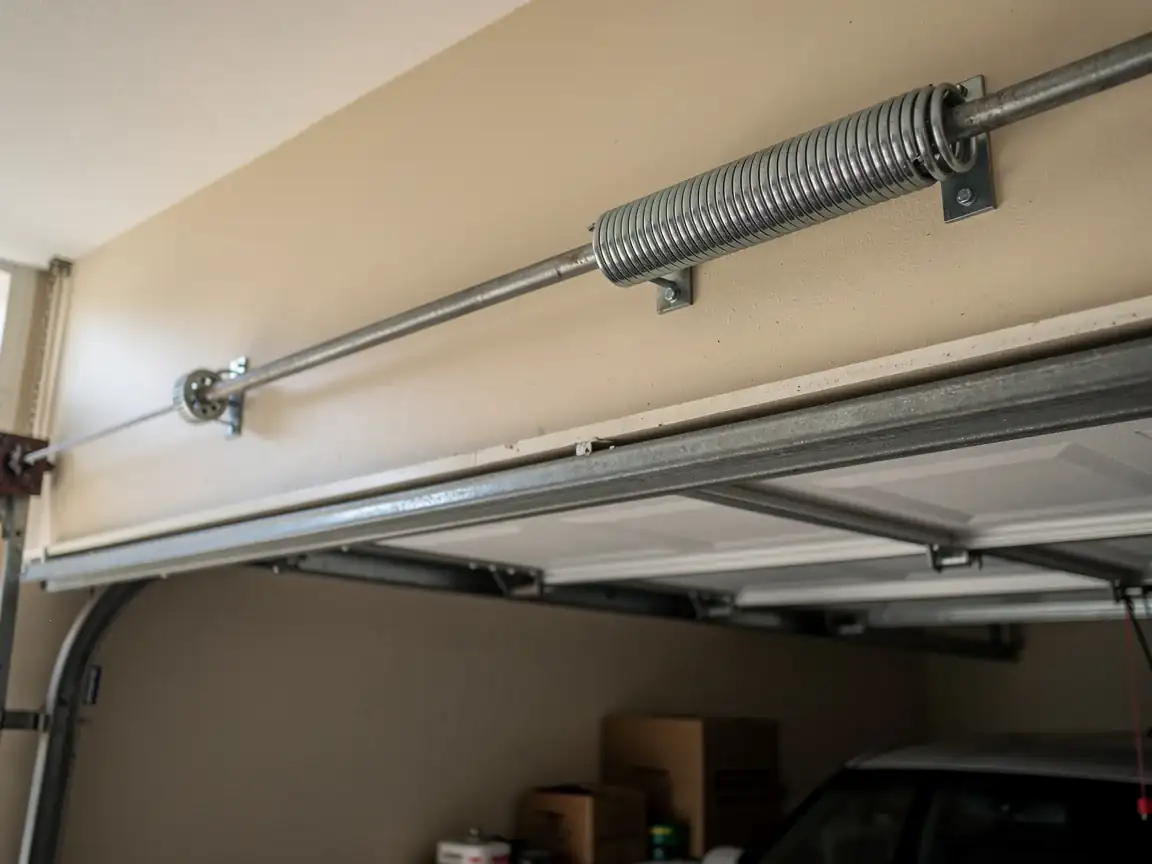
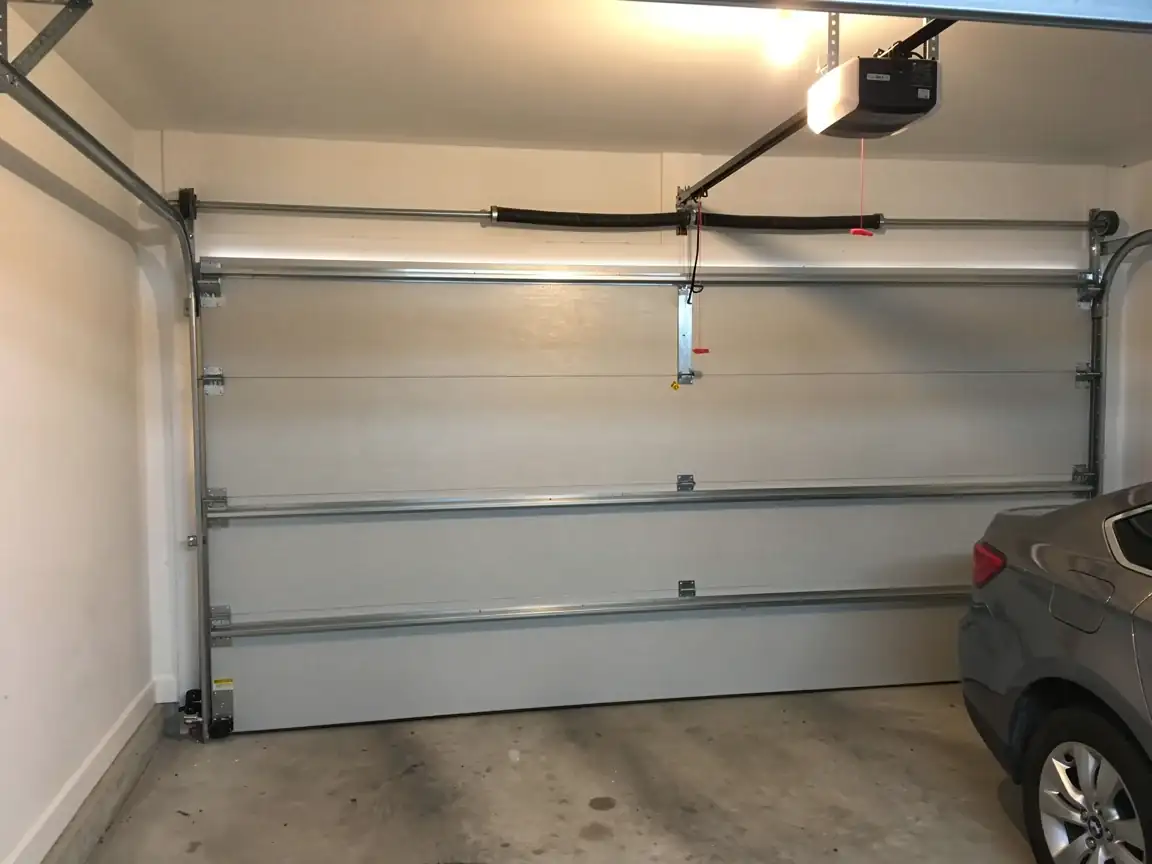
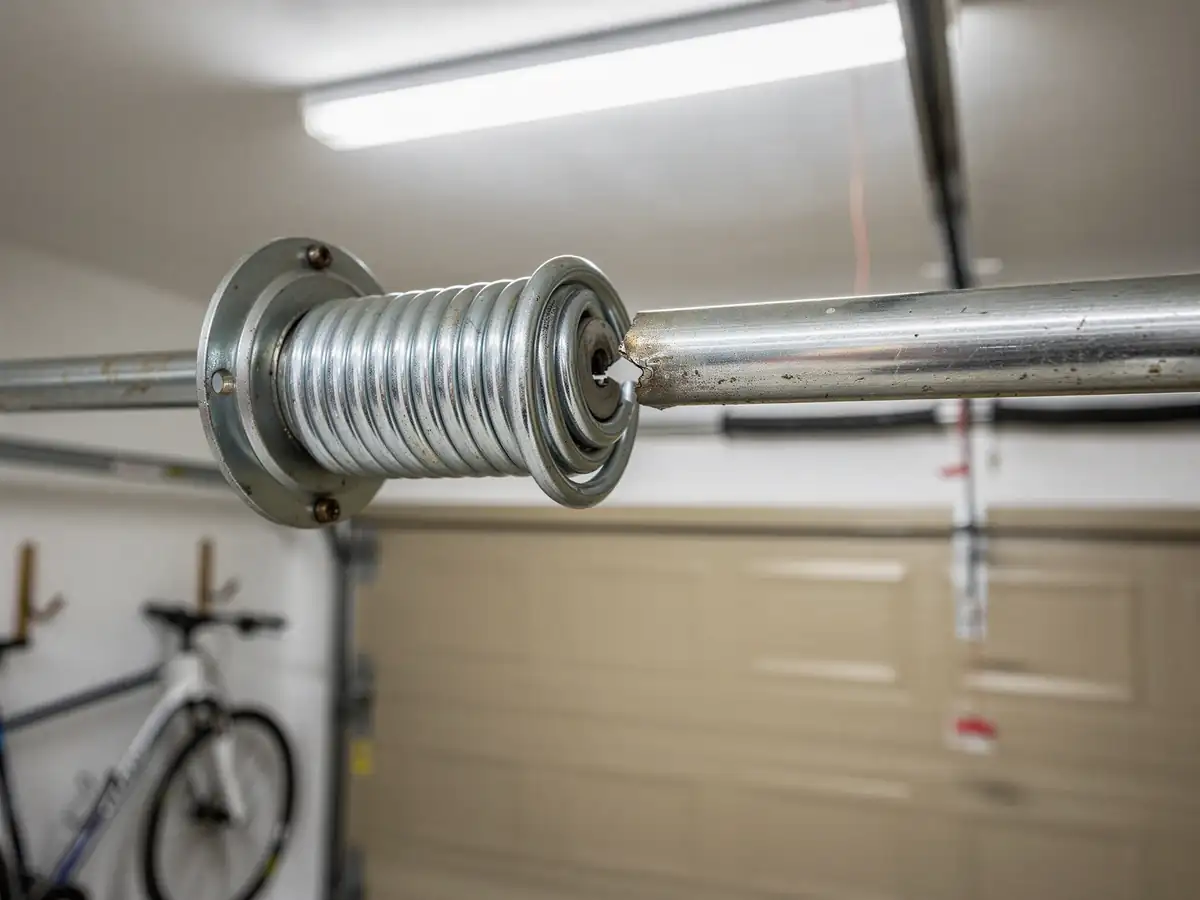
Edgewater's housing stock centers on a median build year of 1987, just a notch past the broader service area's 1986 median. That gap sounds small, but it's the window when a lot of builders switched from extension springs mounted above the horizontal track to torsion springs on a shaft above the door. If your house went up right around then, you may have either system, and the failure points aren't the same.
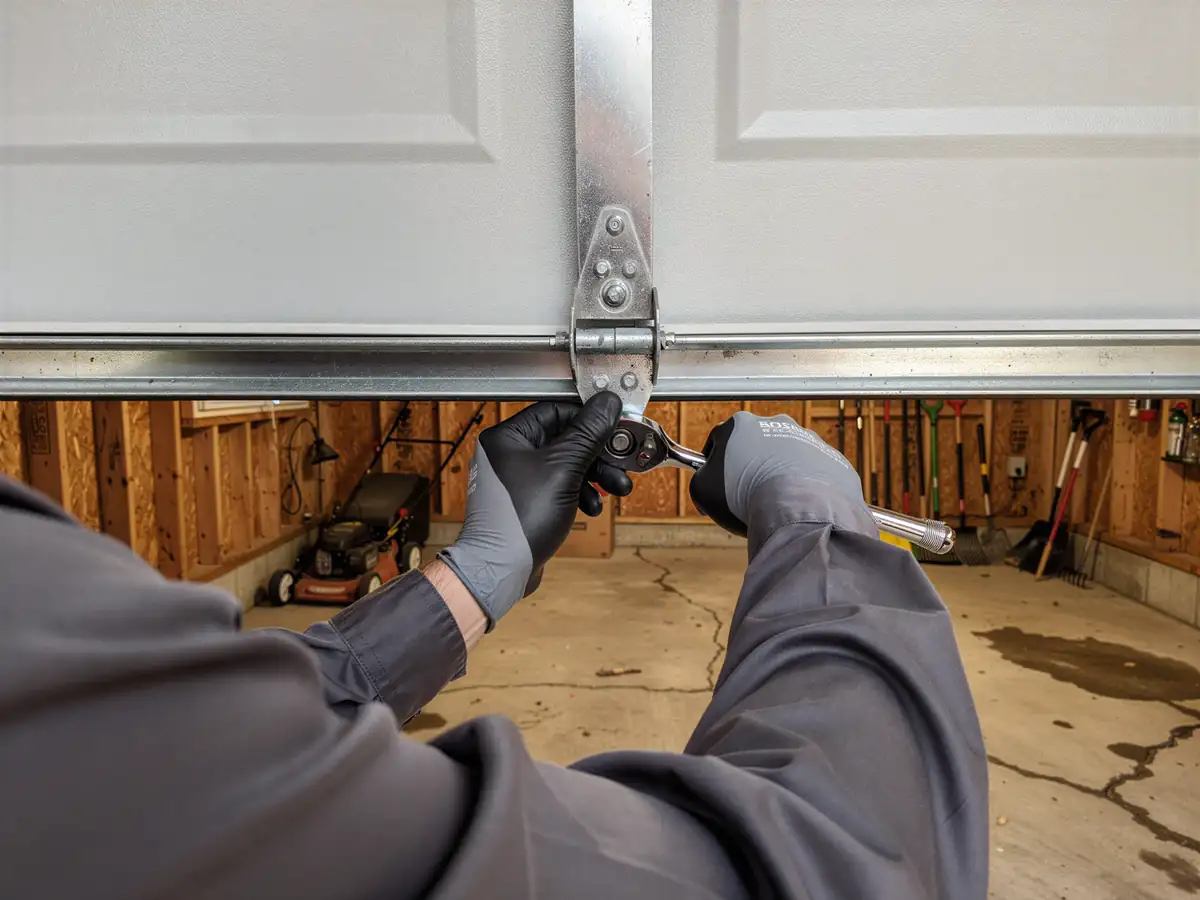
On an extension-spring door, the pulleys and the stretched coils wear and eventually snap under load, often with a loud bang and a door that drops hard on one side. On torsion setups, the shaft bearings or the cable drums go first, sometimes quietly - the door just gets heavier to lift week by week until the opener gives up trying.
We see both in Edgewater because the late-1980s housing push here overlapped with that hardware changeover. The mild coastal climate doesn't freeze anything, but humidity and salt air do work on exposed galvanized coil springs and unsealed track bolts over three decades, so age matters here even without harsh winters.
When you call, tell us the rough age of the house if you know it. That single detail narrows down which spring type we're loading on the truck before we leave Daytona Beach.
We don't guess which hardware you have sight unseen - a quick phone description saves a wasted trip.
That's the local read before we even get into what tends to go wrong once the door's in use for years.
This is the picture, not the only word on it.
More below on how that plays out once parts start failing.
Keep reading for the complications that follow from that era of construction.
The Complications
Edgewater has 10,809 households, smaller than the roughly 54,644 across the full area we cover, and the median household income here is $58,805 - noticeably under the area-wide $69,150. That gap matters for one practical reason: when a spring or opener fails on a door built in the late 1980s, the repair-versus-replace math tips toward repair more often here than in higher-income pockets of the service area, simply because stretching the life of existing hardware makes more sense on a tighter budget.
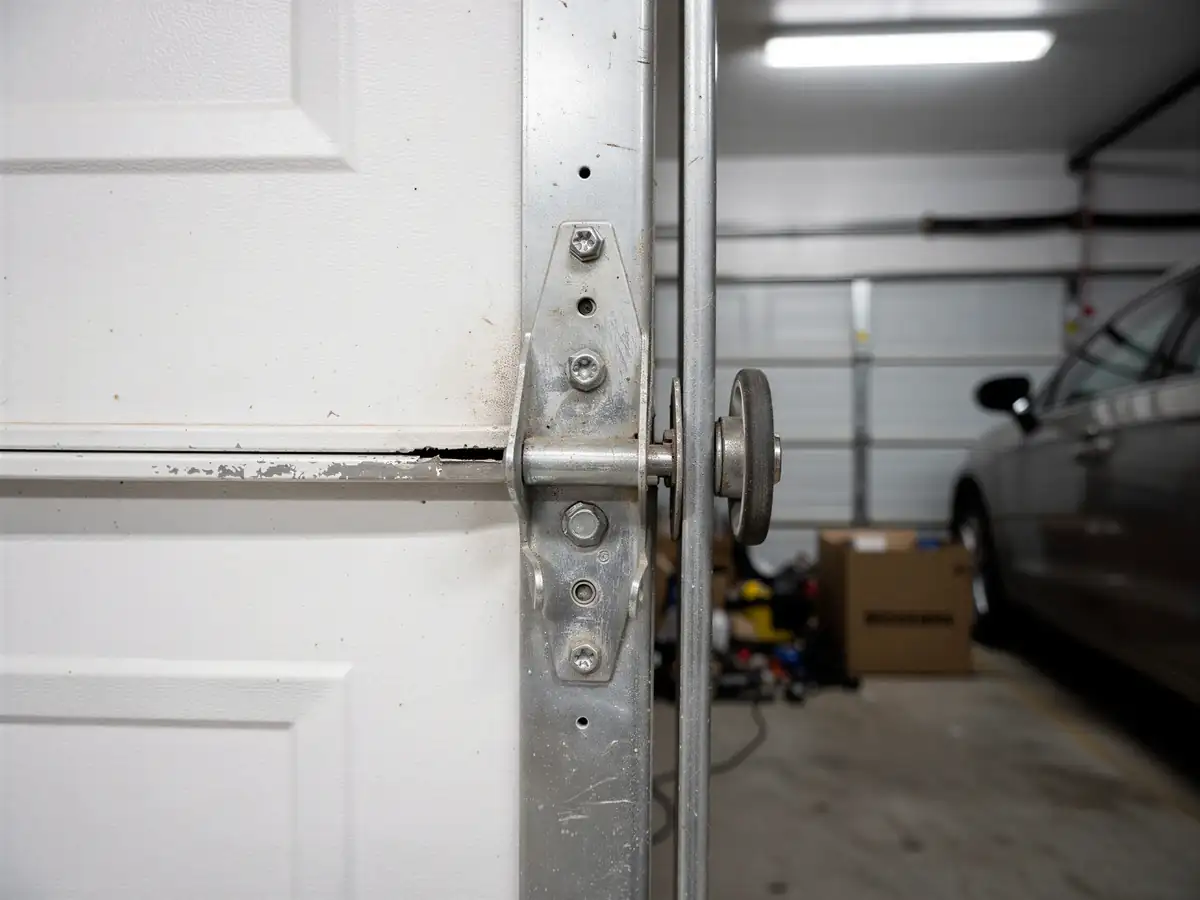
The mild temperate climate means we're not fighting frozen tracks or ice-locked weatherstripping. What we do run into is thirty-plus years of exposure wearing on fasteners, hinges, and the galvanized coating on springs near the coast. Rust doesn't announce itself with a bang the way a snapped spring does - it shows up as a door that binds, an opener that strains, or rollers that have gone from round to oval.
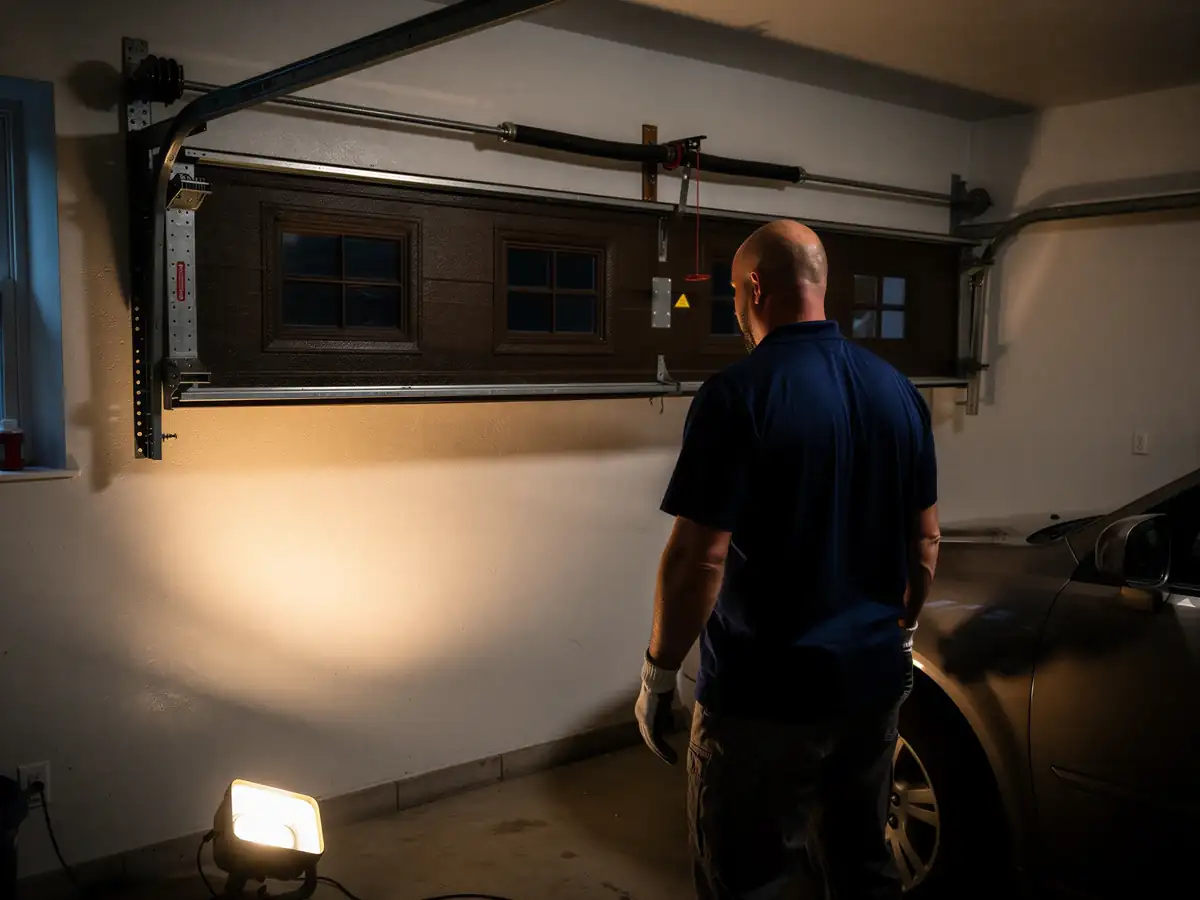
One honest limit: if the torsion shaft itself is bent or the track is rusted through at the mounting brackets, we're not patching that in place. At that point you're looking at new track or a new door section, and we'll say so rather than bolt a fix onto bad bones.
Because Edgewater sits 19 miles out from our Daytona Beach base, we try to diagnose as much as we can over the phone before the drive, so the truck that shows up is loaded for the actual job, not a guess.
Parts We Carry
For a town where the median home dates to 1987
We carry torsion springs sized for single and double doors from that era, along with the older extension-spring hardware for houses built just before the switchover. Both show up in Edgewater, so both ride on the truck.
We stock standard rollers, cables, and center and end bearings that fit the tracks common to 1972-1993 construction across the broader service area
This covers the bulk of what fails on a door that's been running for three decades. Hinges and springs rated for coastal humidity are part of that stock too, since galvanized coatings here work harder than they would inland.
Openers are the one category where we don't carry every brand's full parts line on the truck
If your unit needs a specific circuit board or a logic module tied to an older proprietary opener, that part sometimes has to be ordered, and we'll tell you that up front rather than promise a same-visit fix we can't deliver.
Panels are the other case-by-case item
A single damaged section on an older door sometimes can't be matched exactly, since manufacturers phase out colors and ridge profiles over the years. When that happens, we'll walk you through whether a close match or a full door makes more sense, instead of installing something that'll stand out.
How Long You Are Without the Door
Because we run out from Daytona Beach and Edgewater sits about 19 miles from the shop, the drive itself adds to the window between your call and a wrench actually turning on the door - longer than it would for a job five minutes from base. We factor that travel time into scheduling rather than promise a window that doesn't account for it.
For straightforward failures - a snapped spring, a broken cable, a worn roller - the parts we carry for 1980s-era doors mean the job itself usually isn't the long part once we're on site. The waiting happens before the truck arrives, not during the repair.
Where the timeline stretches is a part that has to be special-ordered - an opener logic board or a panel that isn't a standard stock color. In those cases we'll give you a realistic estimate once we know exactly what's needed, rather than a placeholder number meant to get you off the phone.
If your door is unsafe to operate - off the track, one spring holding the whole weight, or an opener trying to force a jammed panel - say so when you call. That changes how we prioritize the route out to Edgewater that day.