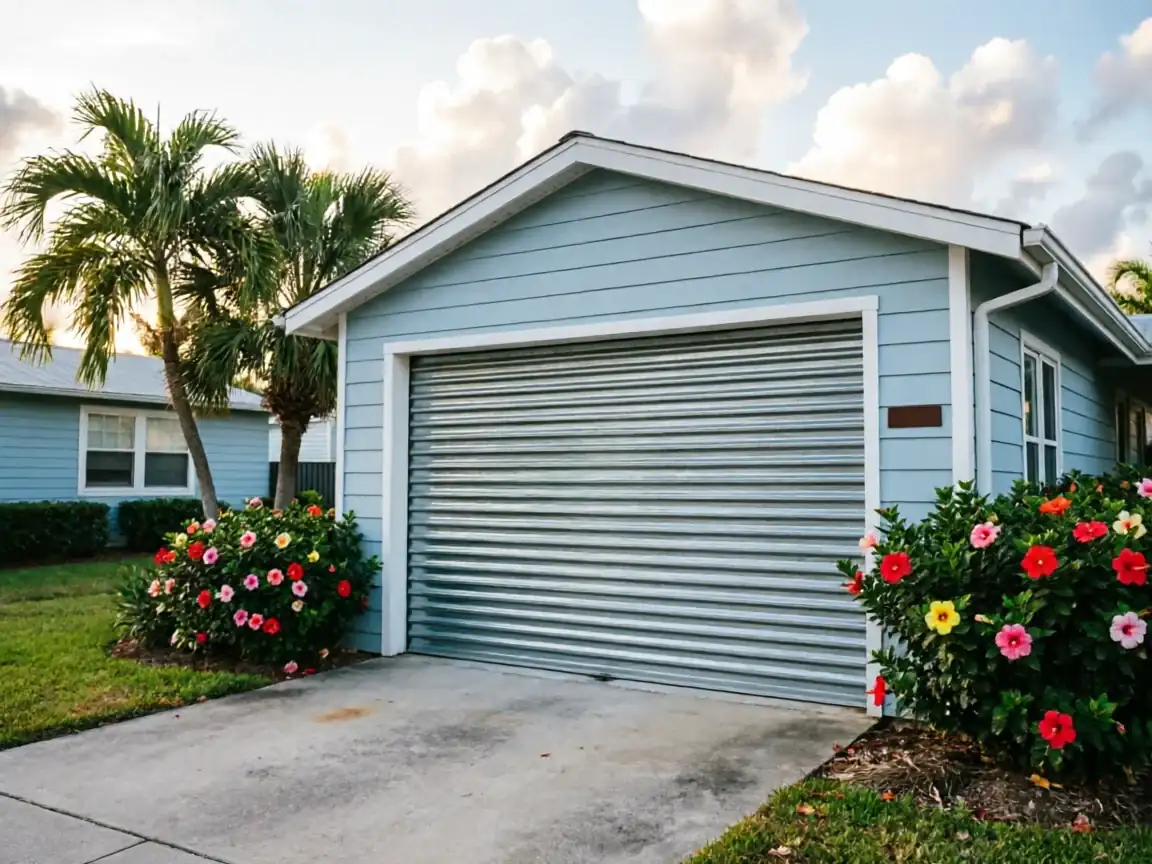
Booking a Visit
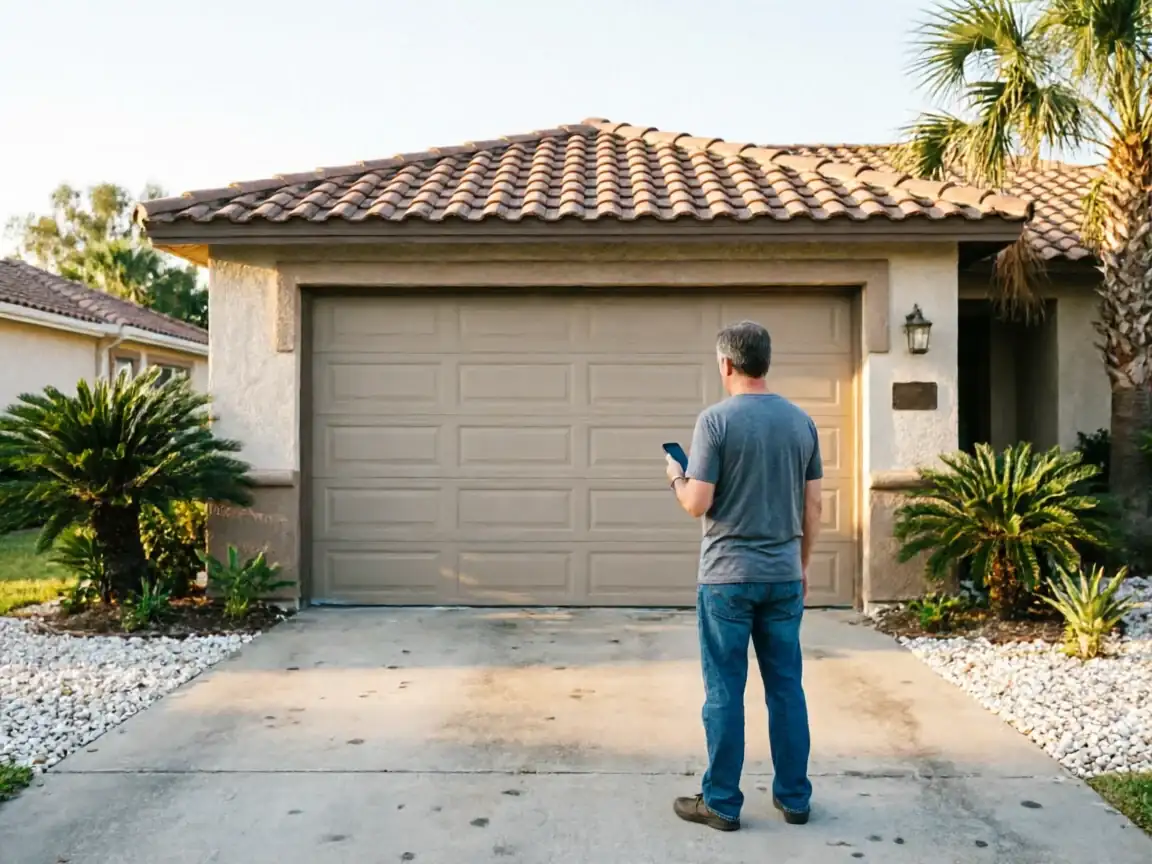
Ormond-by-the-Sea is a small stretch - about 3,768 households, not a sprawling grid of subdivisions. That matters for how a job gets scheduled. We're not running a crew that sits a few blocks away; we come out of Daytona Beach, roughly 11 miles south. When you call, tell us what the door is doing and whether it's a single or double, because on a small coastal strip like this the hardware tends to run in patterns - if one neighbor's spring went, the one two doors down is probably close behind, same age, same wear. We book the visit around what you describe, not a generic walkthrough, because a town this size doesn't generate enough call volume for us to guess wrong twice.
We don't keep a branch or a truck staged in Ormond-by-the-Sea itself. Every job here starts with a drive, so if you need something same-day, say so when you call and we'll tell you straight whether that's realistic for that day.
The Symptom
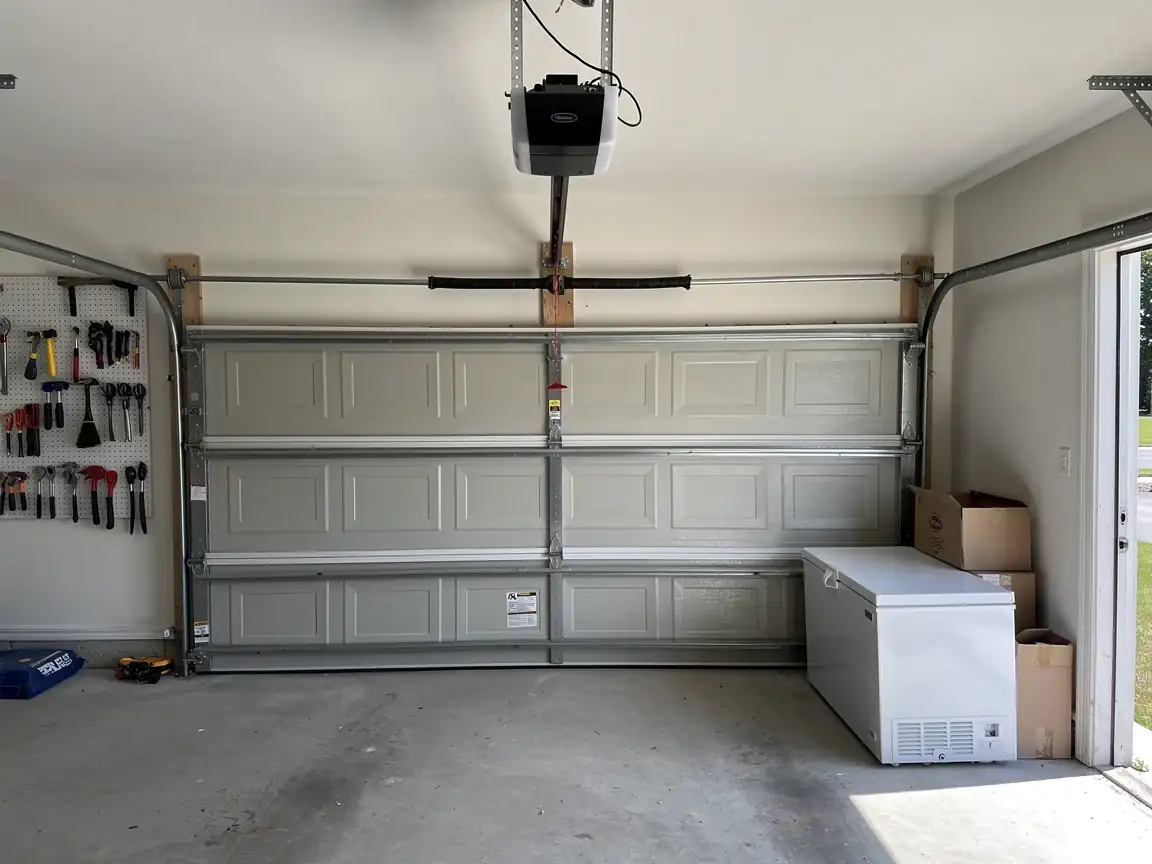
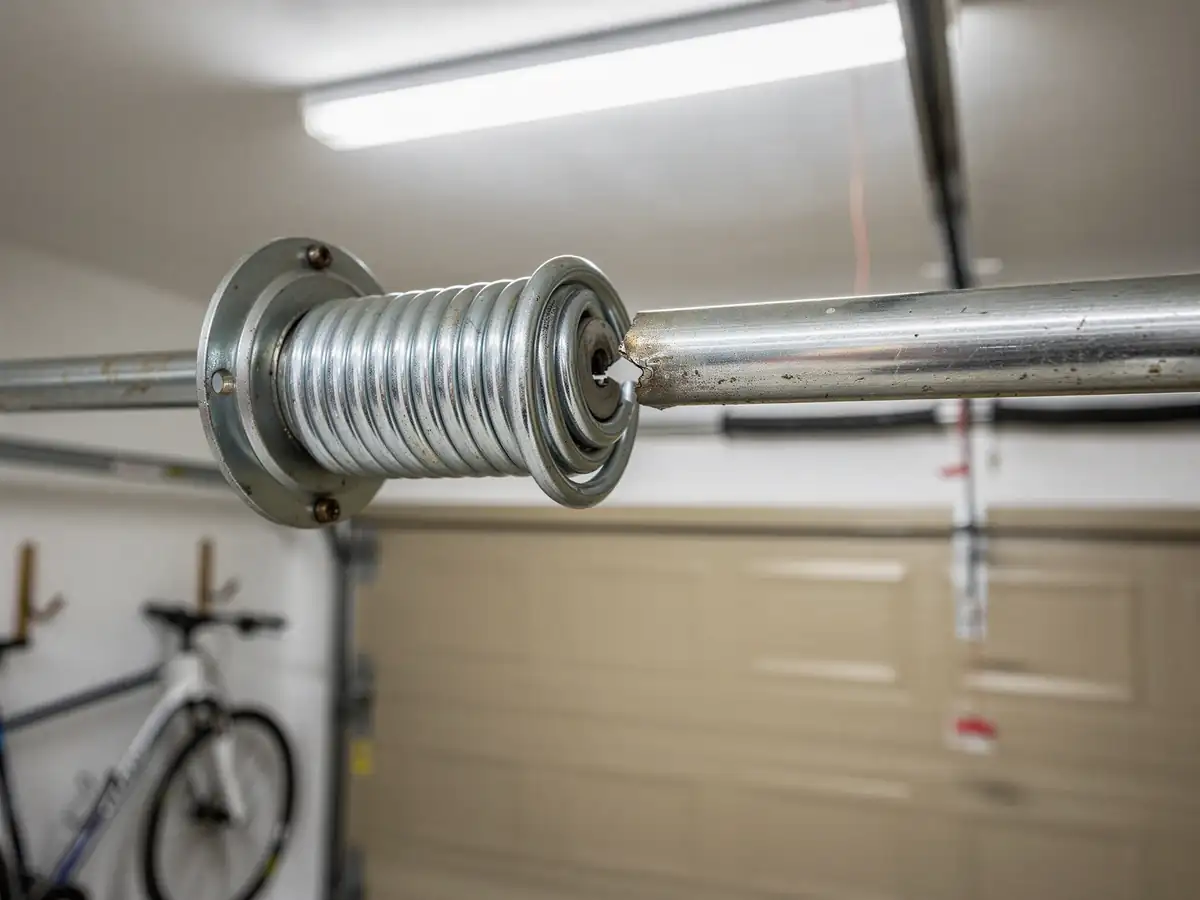
Most of the housing on this stretch went up around 1972 - about fourteen years ahead of the median for the broader Daytona Beach service area. That gap shows up in the symptom, not just the paperwork. A door from that era is more likely to be running its original torsion spring, or a replacement spring put on decades ago by whoever owned the house before, on track hardware that was never upgraded to today's standard radius.
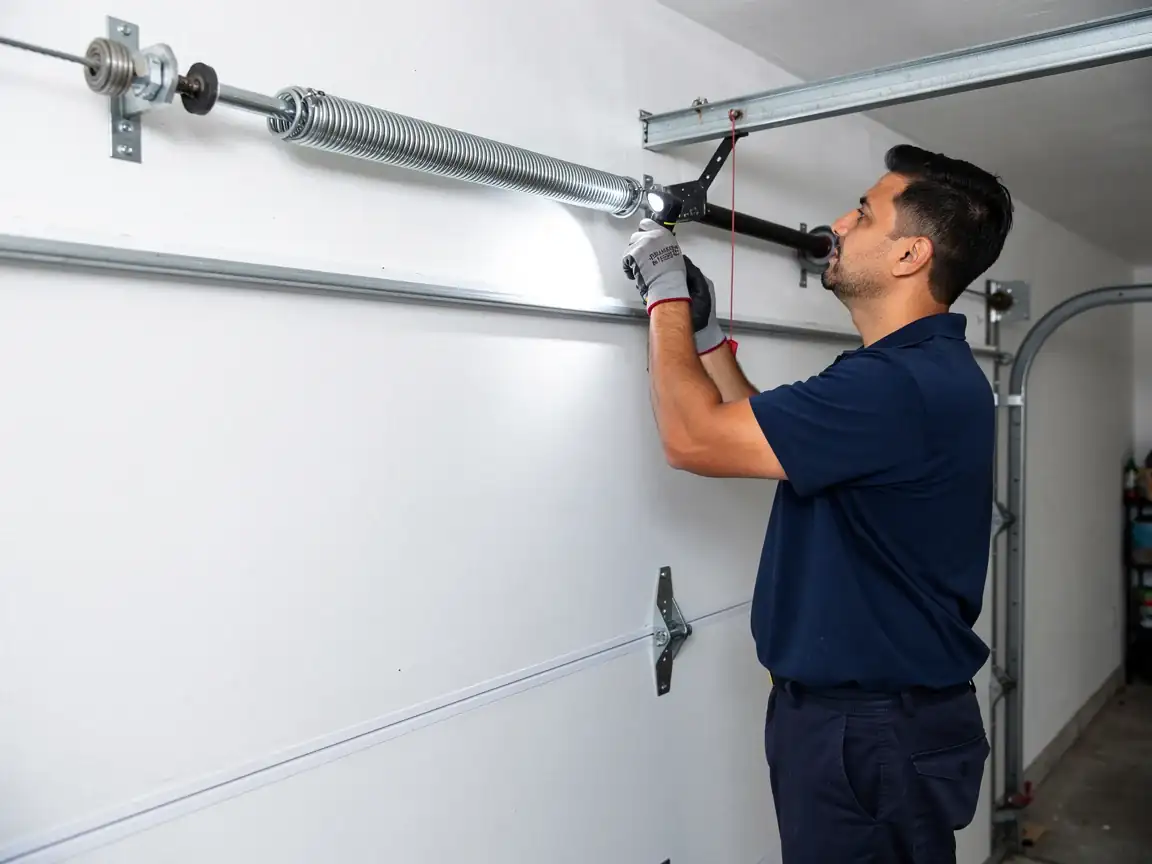
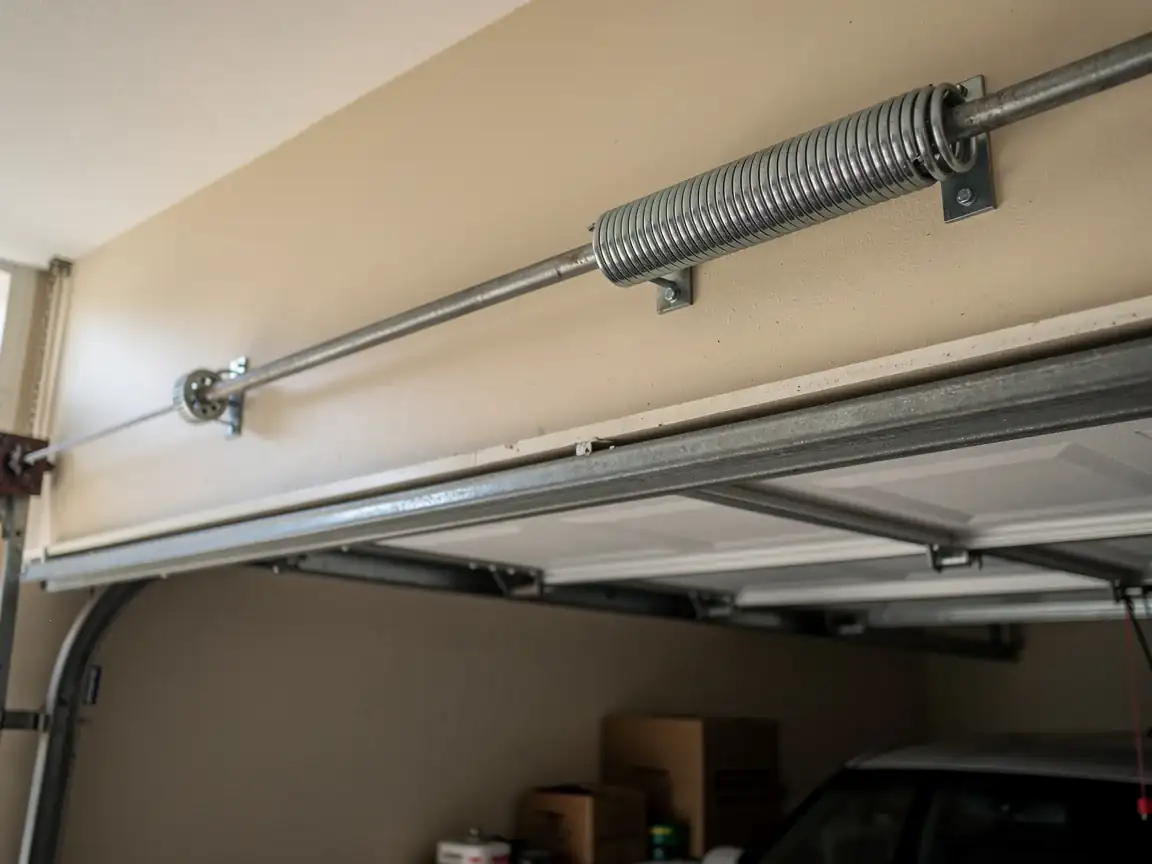
So when the symptom is a door that won't lift, or one that lifts a few inches and stalls, we're not starting from the assumption of a modern opener glitch. We're starting from the assumption that a 50-year-old spring finally let go, or that the cable on one side frayed through at the drum. The coastal air here is mild temperate but salt-laden, and that combination corrodes galvanized spring coils and hinges faster than it wears them mechanically - rust pitting weakens the wire before fatigue would. That's the symptom pattern worth naming out loud before a tech ever shows up: it's age plus salt air, not one or the other.
How Long You Are Without the Door
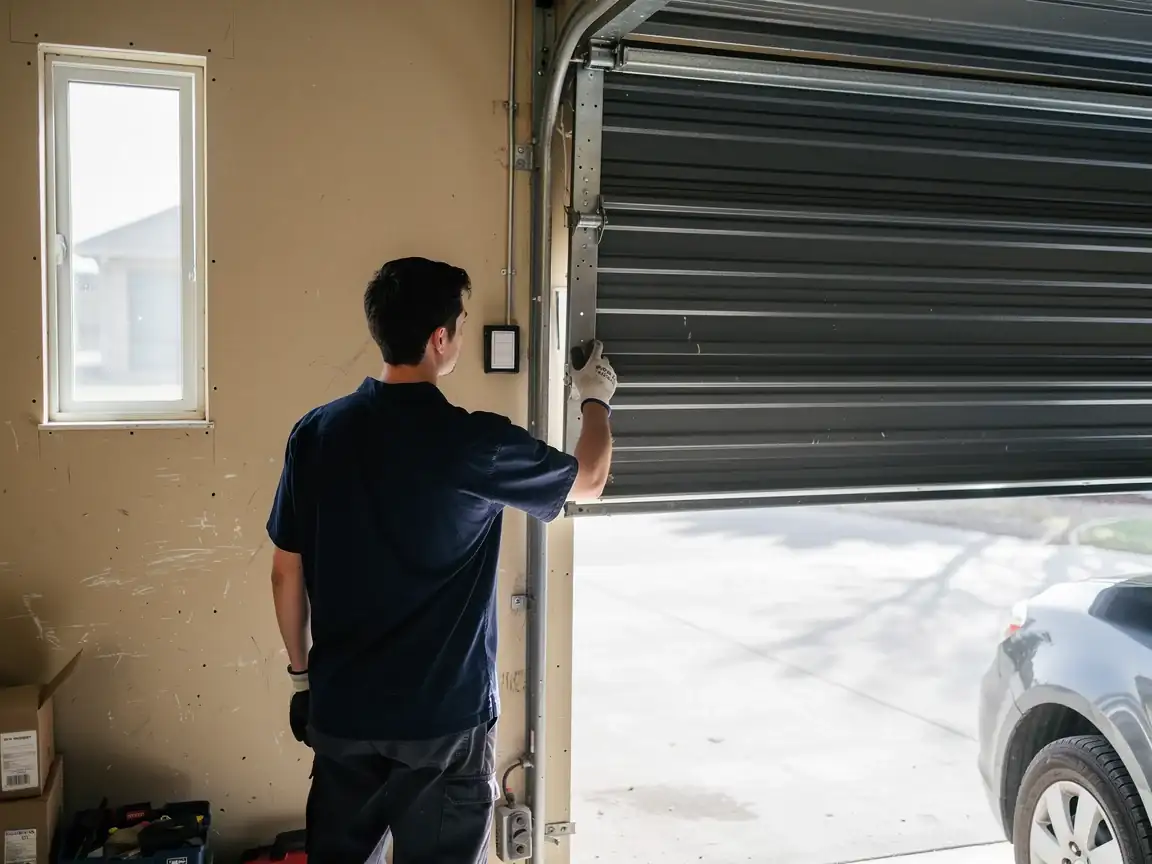
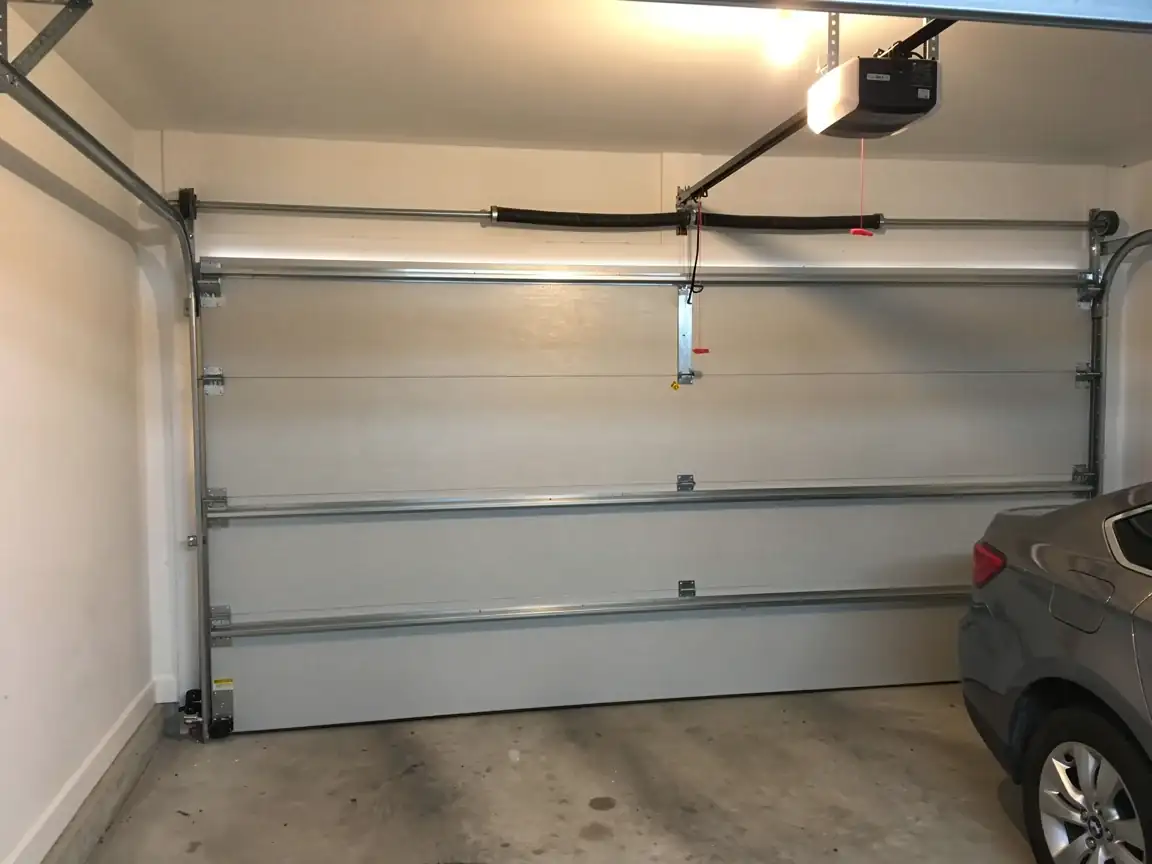
A broken torsion spring on a double door usually means the door is out of service until someone replaces it
You can't safely hand-crank a door that size without the spring doing its job, and trying to force it risks the cable jumping the drum. For a single door, there's sometimes enough give to lift it manually for a day, carefully, but that's not something we'd tell you to rely on.
Because we're traveling the 11 miles from Daytona Beach rather than dispatching from somewhere closer
The honest answer is that how long you're without the door depends on when in the day you call and what part is involved. A spring swap is a same-visit job once a tech is on site. A part that needs ordering - an opener board, a specific drum size for older track - adds the lead time for that part to arrive, and we won't promise a date we can't back up.
- 11 miles
What the Repair Takes
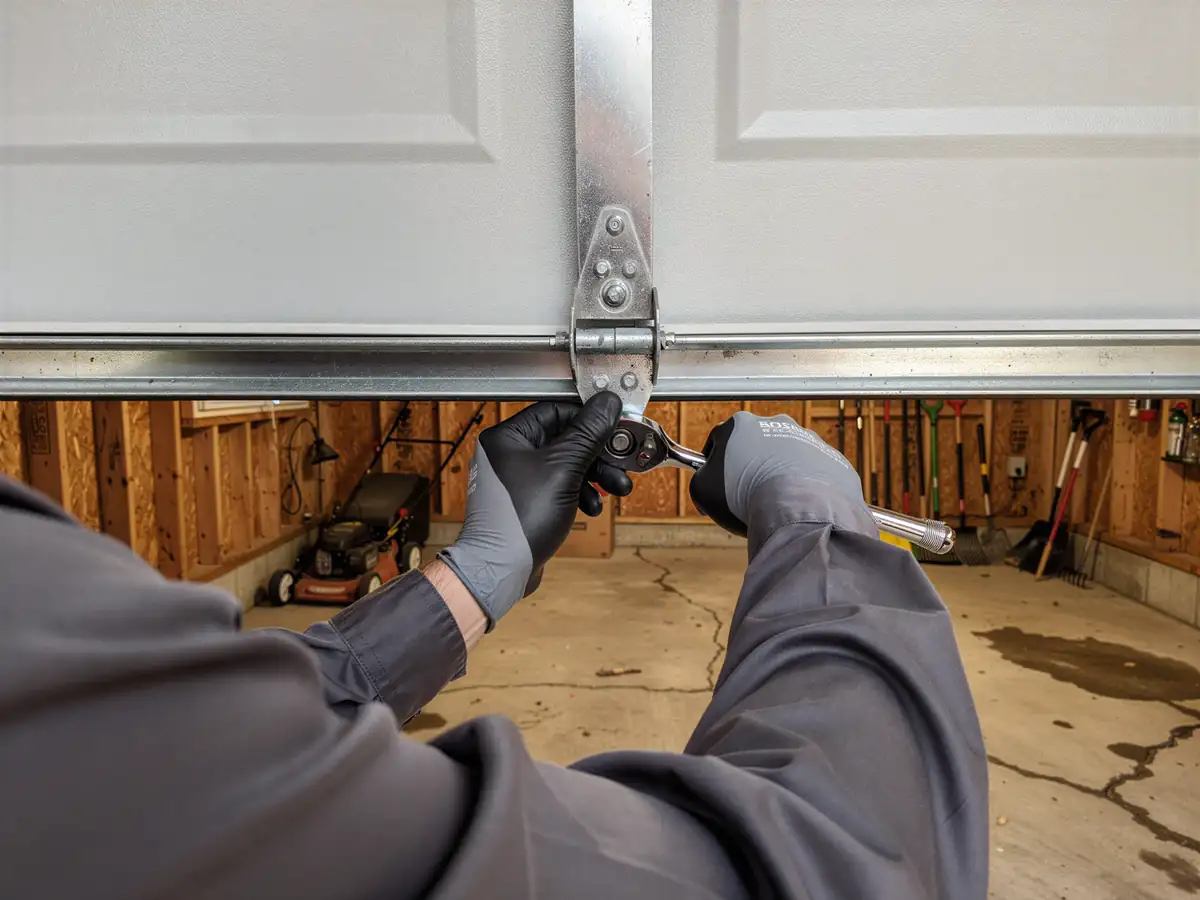
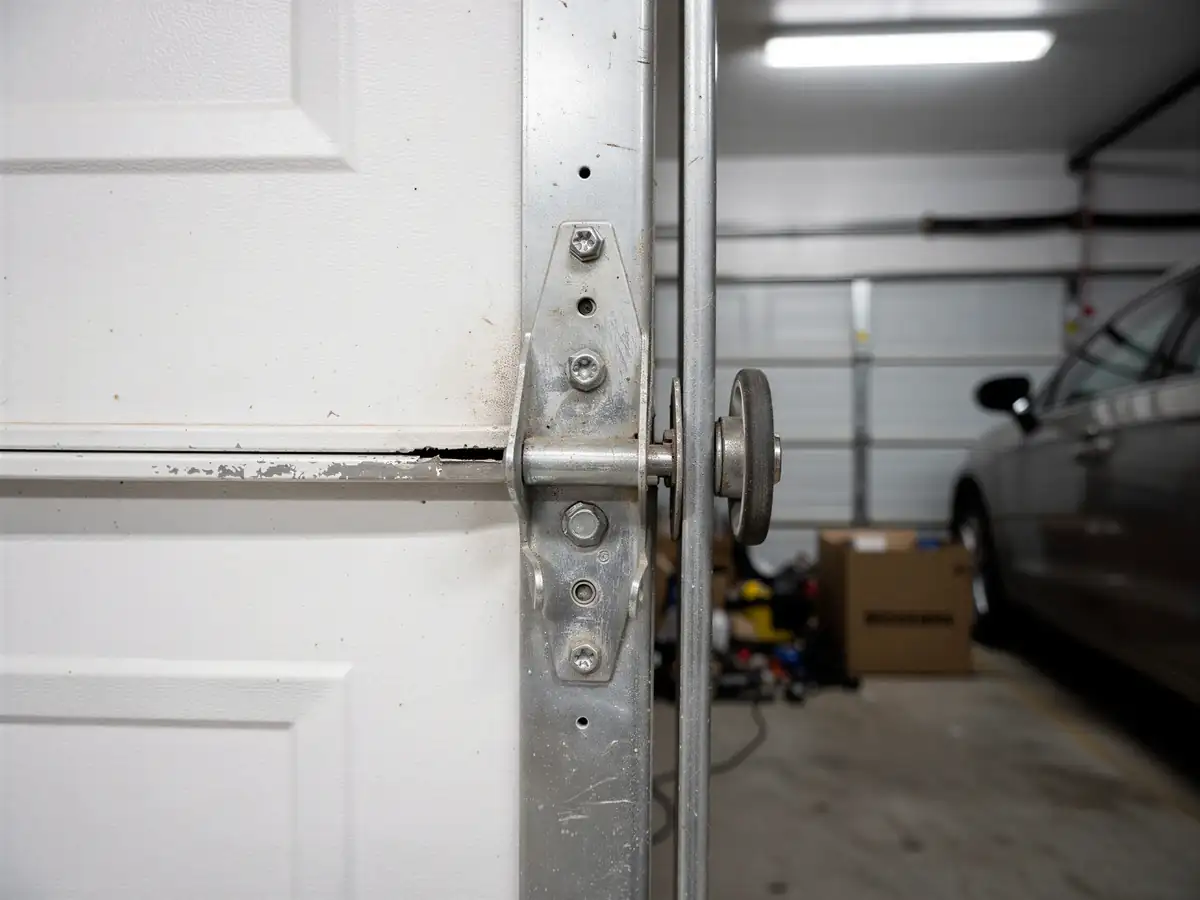
On a house from the early 1970s, the repair often takes longer than the same fix would on a newer door, simply because the hardware isn't standard anymore. Track widths, drum sizes, and spring wire gauges have shifted over fifty years, and a tech working on original equipment sometimes has to adapt a current part to fit rather than swap in an exact match off the truck.
Given a median household income of $67,389 here, most of the calls we get are repair calls, not replacement calls - people want the door working again for a reasonable bill, not a full new unit. We respect that, and a spring, cable, or roller repair on a sound door is almost always the right call financially. Where it isn't: if the door panels themselves are rusted through or the track is bent beyond true, no amount of parts-swapping fixes that, and we'll say so rather than keep billing small repairs against a door that's done.
The Complications
The biggest complication on this stretch is parts lead time for older hardware. We don't stock every spring wire gauge or drum size that a 1972 door might need, and if your door is running genuinely original equipment, the exact match sometimes has to be ordered rather than pulled off the truck that day. That's an honest limitation, not a sales pitch for replacement - plenty of these doors are fine candidates for another decade of life with the right spring.
The other complication is salt air corrosion that isn't visible until a tech has the spring off. Surface rust on the outside of a coil doesn't tell you much; pitting on the inside of the wind, where the coils rub, is what actually predicts failure, and you can't see that without disassembly. So a repair that looks simple on the phone - "my spring broke" - can turn into a conversation about whether the opposite spring, same age, same exposure, is worth replacing at the same time rather than calling us back out in six months.